Will Oil Stain My Epoxy Garage Floors? The Scientific Truth About Your Garage Floor

PolyMagic PierMagic • December 11, 2025

Stain Resistance: One of the many benefits of Epoxy Coating

Every garage owner eventually faces it. You pull the car out, move the lawnmower, or shift the boat trailer, and there it is: a dark, spreading puddle of oil staring back at you from the concrete.


On raw concrete, that puddle does not stay a puddle for long. It soaks in, and once it does, it is a permanent stain. For homeowners in Kansas City, Overland Park, Jefferson City, Columbia, and across the Lake of the Ozarks, keeping a garage floor clean is a constant battle against vehicle leaks, seasonal road brine, boat fuel, and equipment spills.


If you are considering a garage floor upgrade, the obvious question is: will an epoxy floor actually hold up against oil, or will it just stain like the concrete underneath?

The answer is yes, a professional floor coating creates a non-porous barrier that repels oil. But the details matter, and not all coatings are equal. Here is the science behind stain resistance, why it matters for Midwest garages specifically, and what separates a coating that lasts from one that peels.

Why Raw Concrete Stains Permanently

Understanding the problem starts with the surface itself. Raw concrete is not solid. It is full of microscopic pores and capillaries, which makes it behave more like a dense sponge than a sealed surface.


When hot motor oil drips onto a bare garage floor, the heat reduces the oil's viscosity, making it thinner. Gravity pulls that thinned oil deep into the concrete pores. Once it penetrates, it bonds to the material and is nearly impossible to fully remove. The stain becomes permanent, and over time it can weaken the concrete structure itself.


This is the same reason road salt and brine are so damaging. Winter road crews across Kansas City, Jefferson City, and Mid-Missouri use magnesium chloride and rock salt to clear streets. That mixture rides home on your tires, melts on the garage floor, and seeps into the concrete. The freeze-thaw cycle then causes pitting, cracking, and spalling from the inside out.

How a Professional Floor Coating Changes Everything

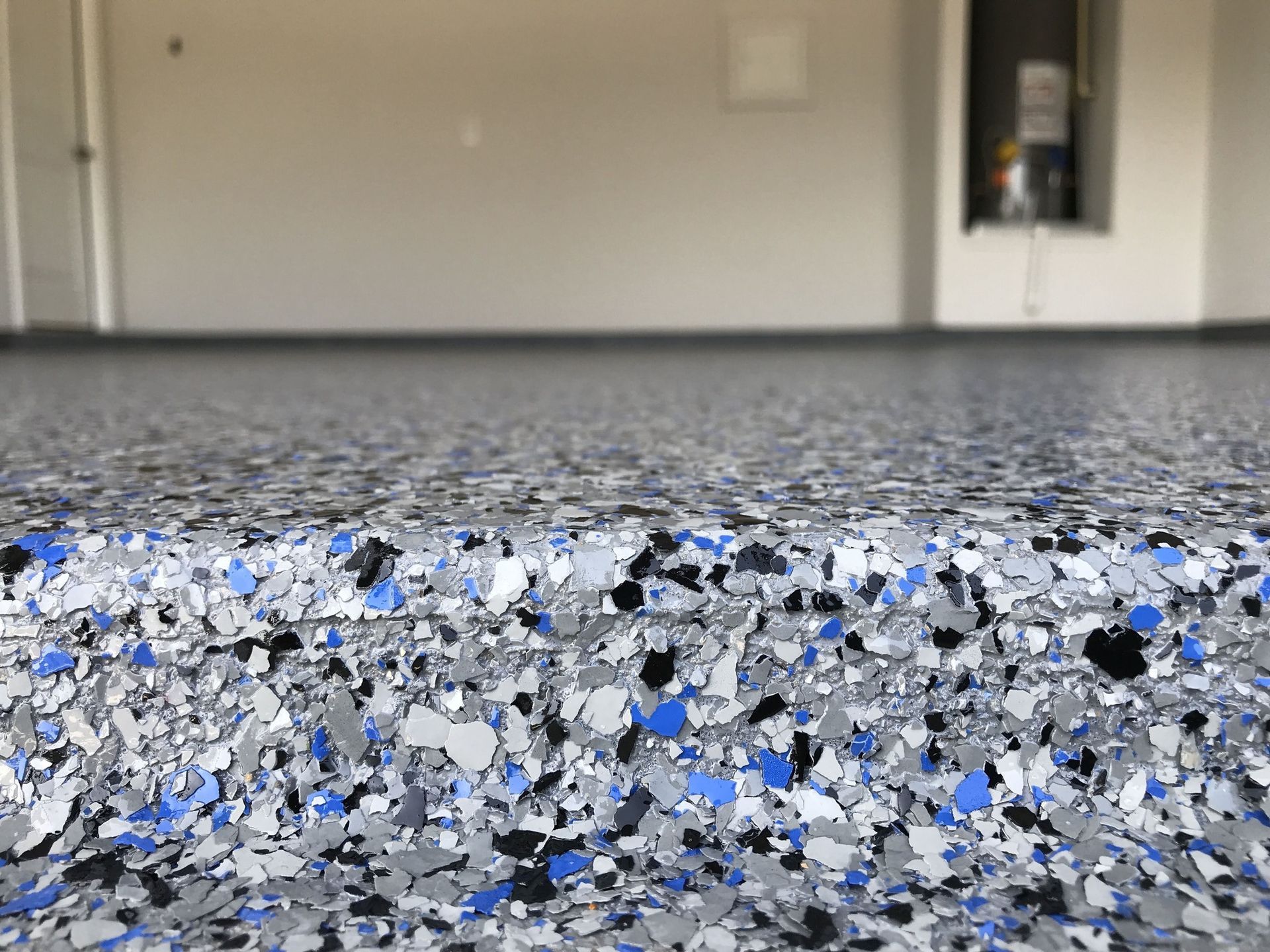
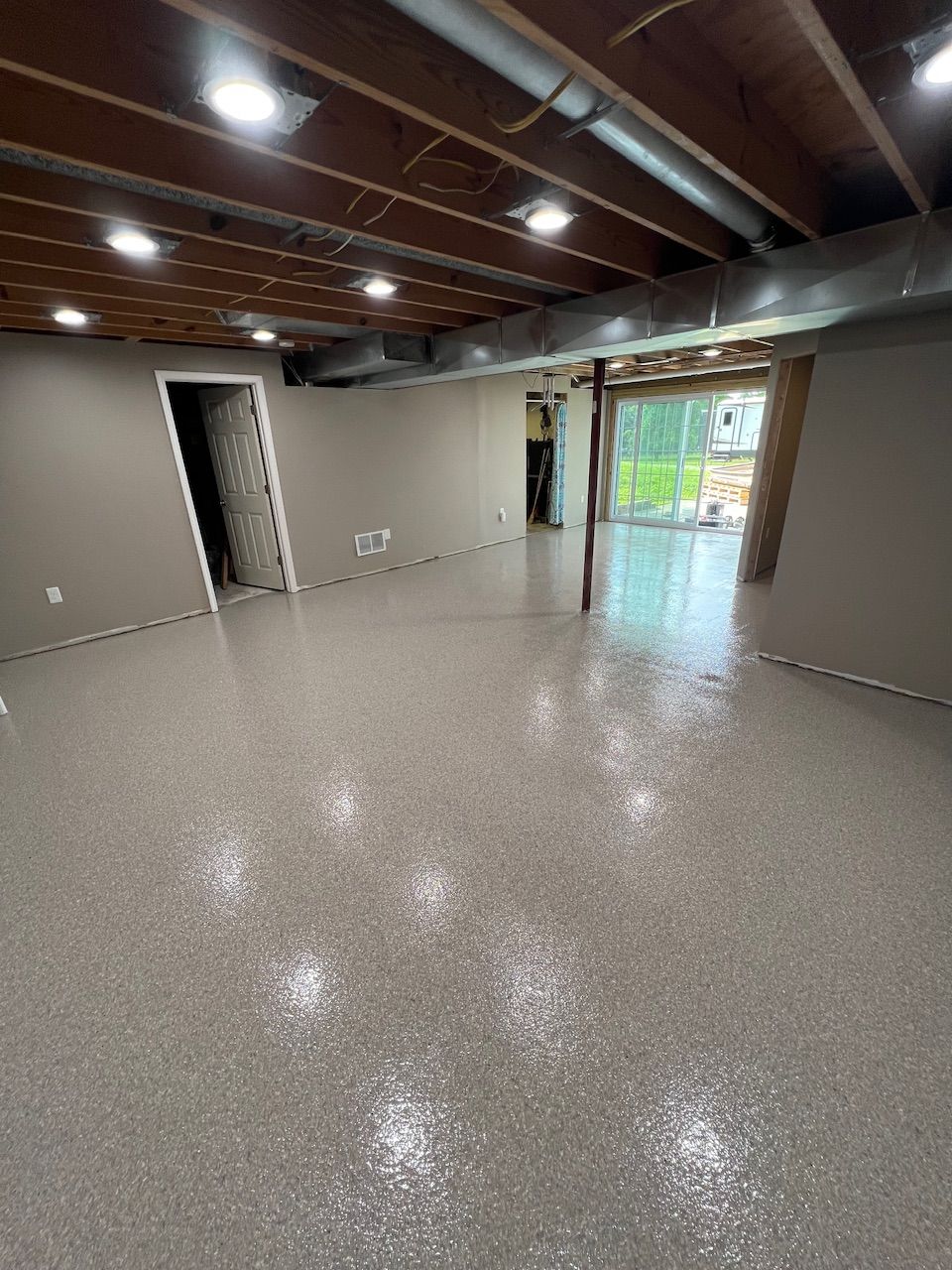
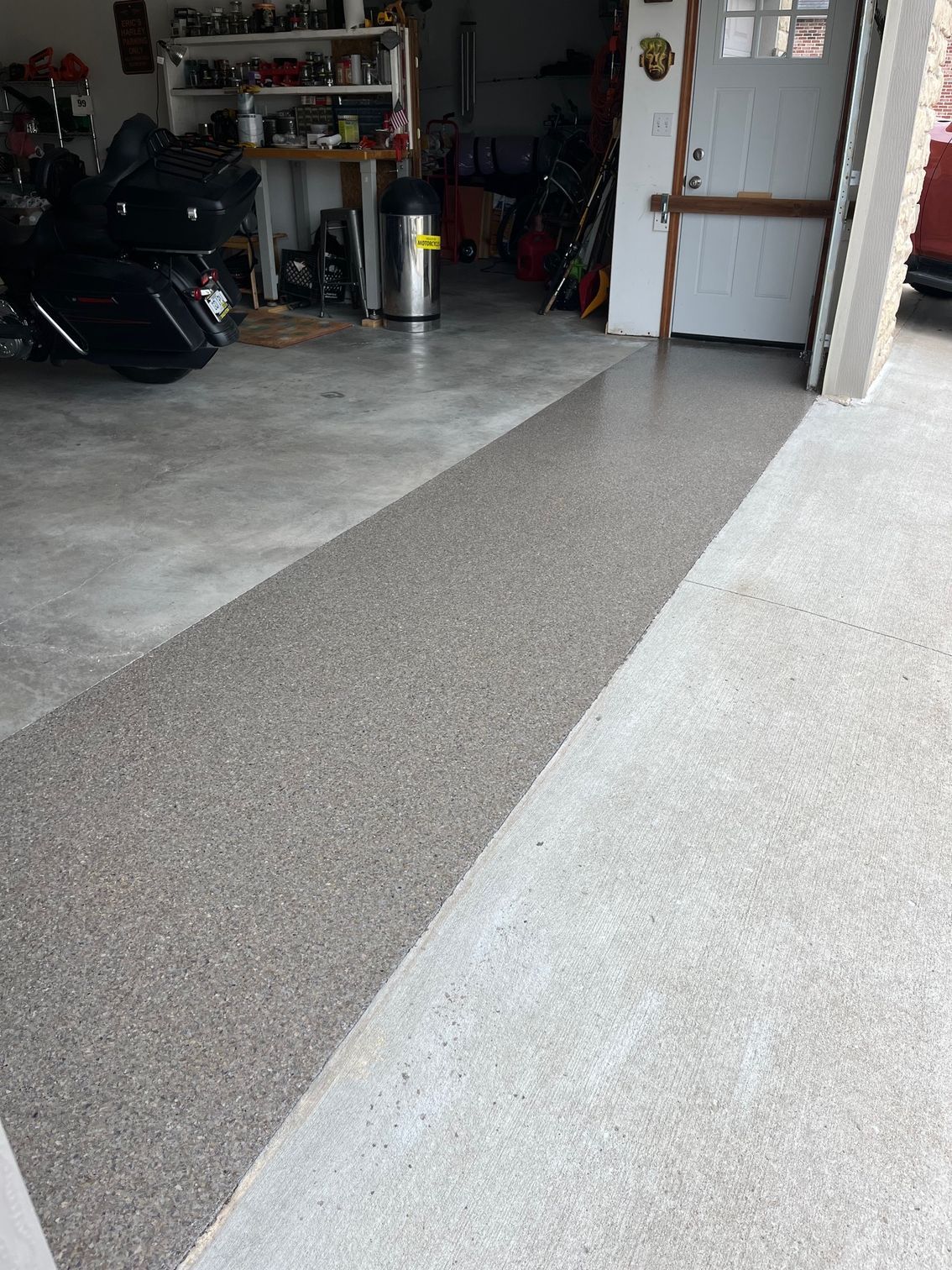
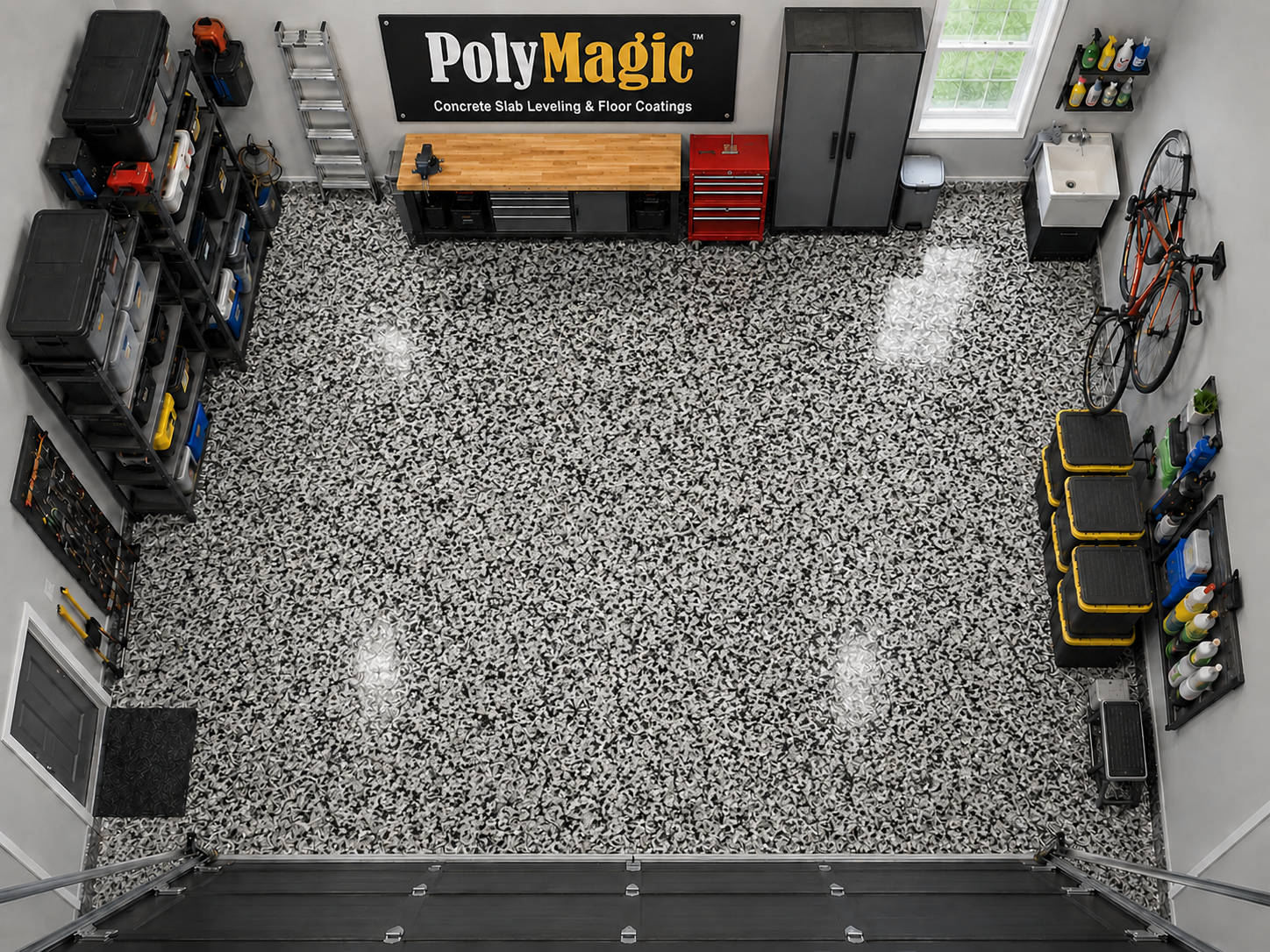
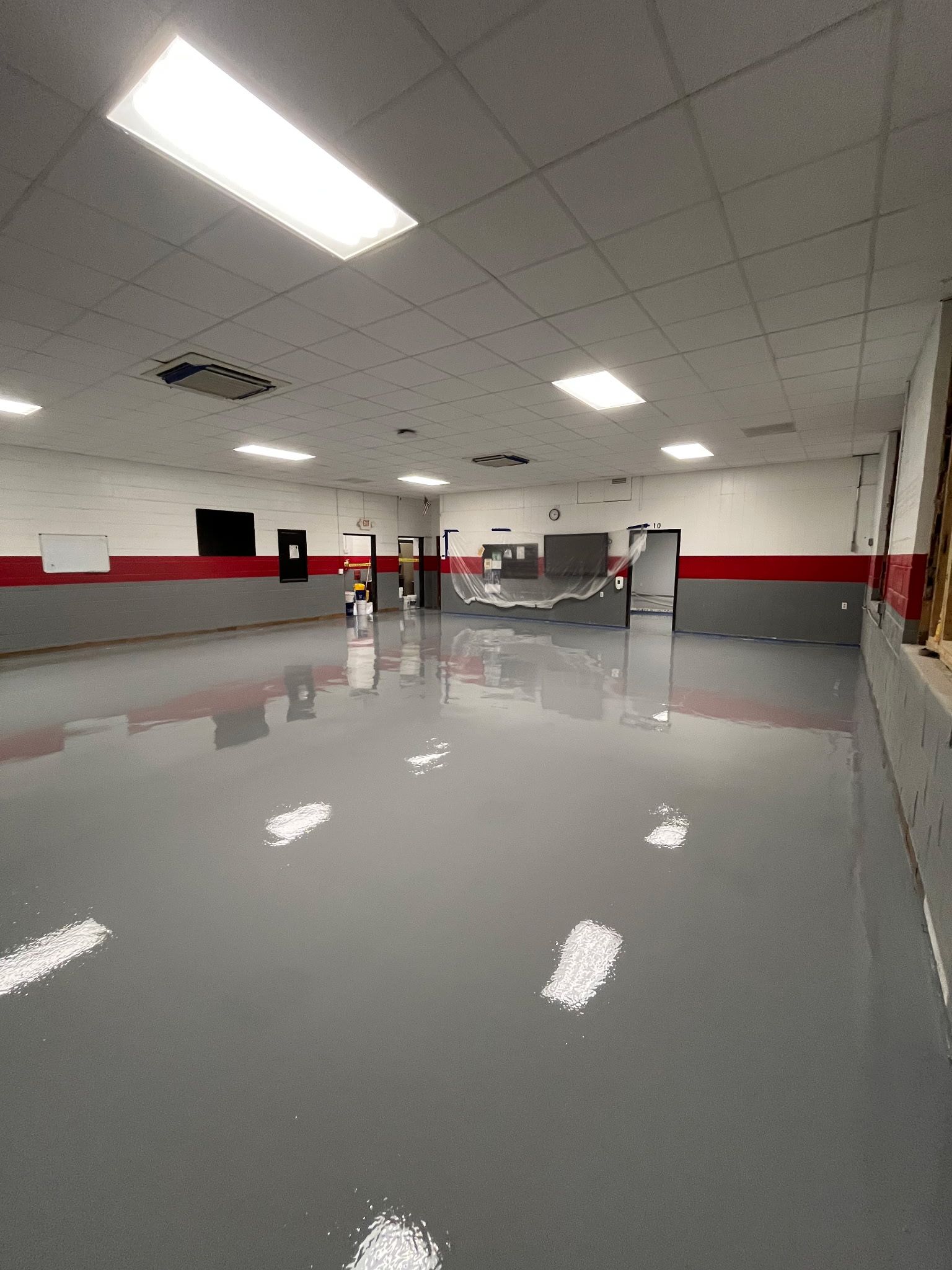
When PolyMagic installs a professional garage floor coating, whether that is an epoxy system or an advanced polyaspartic or polyurea topcoat, the process essentially caps those pores with a solid, impermeable polymer sheet bonded directly to the concrete slab.


Here is what makes oil resistance work at a chemical level:

  • Non-porous surface. The coating seals every pore in the concrete completely. There is nowhere for the oil to penetrate.
  • Chemical resistance. Industrial-grade coatings are engineered to resist wetting. Oil sits on top of the surface rather than soaking in, which means it can sit there for days without causing any staining.
  • Surface tension. The coating creates high surface tension that causes liquids to bead up, similar to water beading on a freshly waxed car hood.
  • Seamless coverage. Unlike tile or stone with grout lines where oil can hide, a poured floor coating is seamless from wall to wall with no gaps to absorb spills.

In short: While these floors are highly durable, they are not self-cleaning. Oil will sit on the surface until you wipe it up, but it will not stain the material underneath.

Extra Protection for Midwest Garages

Kansas City and Mid-Missouri garages face a specific combination of stressors that makes floor coatings more than just an aesthetic upgrade.


In the Kansas City metro, including areas like Lee's Summit, Blue Springs, Overland Park, and Leawood, winter road crews apply heavy doses of magnesium chloride and rock salt. When that mixes with dripping oil and snowmelt on the garage floor, it creates a corrosive brine that attacks raw concrete aggressively.


In Mid-Missouri, the challenge is similar but with additional variables. Jefferson City and Columbia deal with the same freeze-thaw cycles. Lake of the Ozarks properties face the widest variety of chemical exposures: motor oil, marine fuel, 2-cycle oil, transmission fluid, marine greases, and the humidity that comes with lakefront environments. A Lake of the Ozarks garage floor coating has to perform year-round under real working conditions, not just look good in a showroom photo.


A PolyMagic professional coating acts as a sacrificial shield in all these environments. The salt, the oil, and the brine never touch the concrete slab. The coating takes the hit so the slab underneath does not.

What the Coating Resists

A professional-grade system handles more than just motor oil. Common exposures that a properly installed floor coating near me should handle include:

  • Motor oil and used oil: can sit on the surface for days without staining
  • Brake fluid: highly corrosive to ordinary paint, but quality industrial coatings stand up to it
  • Gasoline: occasional spills from the lawnmower or boat will not peel or discolor the floor
  • Road salt and brine: sealed barrier prevents the mix from ever reaching the concrete
  • Marine greases and 2-cycle oil: wipe up clean without leaving residue
  • Transmission fluid: resists penetration under normal exposure conditions

DIY Kits vs. Professional Installation

The difference between a $100 big-box store kit and a professional installation is significant, and it matters directly for oil resistance.


DIY epoxy kits are typically water-based formulas with low solids content. They dry thin and brittle. When a car parks on a DIY floor with hot tires, the heat can cause the tire to bond to the thin coating and peel it right off the concrete, a phenomenon called hot tire pickup. Once the coating peels, the exposed concrete stains just as badly as before.


At PolyMagic, installation starts with diamond grinding the concrete surface. This removes the top layer, erases old oil stains, and opens the concrete pores so the base coat can penetrate and bond mechanically. This mechanical bond is what prevents peeling under hot tires, heavy loads, and chemical exposure. For garages in Jefferson City or Kansas City that see regular vehicle traffic, this preparation step is not optional.


Many properties also benefit from polyaspartic or polyurea topcoat systems rather than traditional epoxy alone. These materials are more UV stable, meaning they will not yellow in sunlight near garage doors or windows, and they cure faster, allowing most Mid-Missouri and Kansas City garage floors to be walked on the same day and driven on within 24 hours.

How the Options Compare

Property Raw Concrete DIY Kit PolyMagic Professional Coating
Oil resistance Absorbs permanently Partial, fades over time Full surface repulsion
Road salt / brine Pits and spalls Limited protection Sealed barrier, no contact
Hot tire pickup N/A High risk of peeling Not an issue, mechanical bond
Cure time N/A 24+ hours, fragile Drive on it next day
Cleanup Scrub and degrease Scrub required Paper towel and mild cleaner
Lifespan Degrades over time 1 to 3 years typical 15 to 20+ years with warranty

Cleaning Oil Off a Coated Floor

One of the most practical advantages of a professional floor coating is how simple cleanup becomes. No scrubbing, no pressure washing, no harsh degreasers.

If you spot an oil spill on your PolyMagic floor, the process is straightforward:

  • Soak it up: use a paper towel or shop rag to absorb the standing liquid
  • Spray it down: mist the area with a mild non-filming cleaner such as Simple Green or diluted Windex
  • Wipe clean: wipe the area dry and the floor looks new


Because the oil beads on the surface rather than soaking in, it wipes away completely. The same three-step process works for gasoline, brake fluid, and most other garage spills.

Safety: Anti-Slip Texture in Wet and Oily Conditions

A smooth polymer surface can be slippery when wet, which is a legitimate concern in a working garage. PolyMagic incorporates anti-slip additives into the topcoat on all residential and commercial installations. This provides traction even when the floor is wet from snowmelt, an oil spill, or a hosing down after a weekend project.


This applies equally to Kansas City garages in winter and to Lake of the Ozarks properties where hose washdowns after boat storage are routine.

Frequently Asked Questions

Is epoxy oil resistant?

Yes. A professional epoxy or polyaspartic floor coating creates an impermeable barrier that prevents oil from penetrating the concrete. Oil sits on the surface and wipes away cleanly. DIY water-based kits offer limited resistance and can peel under heat and chemical exposure.

What should I do with an oil spill on my garage floor?

On a coated floor, simply blot the oil with a rag, spray with a mild cleaner like Simple Green, and wipe dry. No scrubbing or pressure washing required. On raw concrete, act immediately: the longer oil sits, the deeper it penetrates. Even with fast action, raw concrete stains are rarely fully removable.

Can you coat a floor that already has oil stains?

Yes. PolyMagic's preparation process uses diamond grinders to remove the top layer of concrete, which erases surface oil stains and opens the pores for a proper bond. Deeply contaminated areas can be treated with specialty primers before the base coat goes down.

What is the difference between epoxy, polyaspartic, and polyurea floor coatings?

Epoxy is the widely searched generic term, but technology has advanced. PolyMagic uses polyaspartic and polyurea topcoat systems for many installations because they are more UV stable, meaning they will not yellow near windows or sunlit garage doors, and they cure significantly faster. The right system depends on your specific needs, usage, and environment.

How long does a professional garage floor coating last?

With proper preparation and professional installation, a high-quality garage floor coating typically lasts 15 to 20 years or more. PolyMagic backs this with a warranty because the mechanical bond created through diamond grinding is durable enough to warrant it.

Do you serve the Lake of the Ozarks area?

Yes. PolyMagic installs epoxy and polyaspartic floor coatings for residential homes, vacation properties, and boat storage facilities throughout the Lake of the Ozarks region, including Osage Beach, Camdenton, Laurie, and Macks Creek, as well as Jefferson City, Columbia, and the full Kansas City metro.

How much does an epoxy garage floor cost in Kansas City or Mid-Missouri?

Cost varies based on garage size, concrete condition, and the coating system selected. PolyMagic offers free estimates with transparent pricing and no high-pressure sales. Contact us at polymagic.com/contact to schedule an assessment.

Ready to Ditch the Stains for Good?

Stop fighting oil stains on bare concrete. A professional floor coating gives your garage the showroom finish it deserves and the durability to handle whatever gets parked in it.


PolyMagic serves homeowners throughout the Kansas City metro, including Overland Park, Lee's Summit, Blue Springs, Liberty, and Olathe, and across Mid-Missouri: Jefferson City, Columbia, and the Lake of the Ozarks corridor. Free estimates and honest advice.


Schedule your appointment today!

By Illuminate Designs June 9, 2026
Missouri weather is tough on concrete. Kansas City and Mid-Missouri both experience extreme seasonal swings: hot, humid summers, hard freezes, heavy rains followed by droughts, and everything in between. Unprotected garage floors often develop cracks, stains, and surface deterioration as a result. If you’ve noticed your garage floor cracked or sinking, that’s a sign that unprotected concrete is already losing the battle against Missouri’s climate. Professional garage floor coatings create a protective barrier that shields your concrete from: Moisture intrusion and freeze/thaw cracking Salt and chemical damage Oil, fuel, and automotive fluid stains Abrasion and surface wear UV exposure and premature deterioration Protecting your concrete now helps prevent costly repairs or even a full replacement down the road.
May 20, 2026
Concrete surfaces take a beating over time. Between weather exposure, foot traffic, moisture, UV rays, and daily wear, even high-quality concrete can begin to crack, fade, stain, and lose its visual appeal. Environments in the Midwest are susceptible to the freeze/thaw cycle and the drought/flood cycles that exist. Fortunately, when your outdoor concrete begins to show its’ wear and tear, full concrete replacement is not the only option. Concrete overlays provide a durable, cost-effective solution that restores and transforms existing concrete surfaces without the expense and disruption of demolition. At PolyMagic, the trusted Johnson County professional for concrete resurfacing and coatings, property owners are discovering how decorative concrete overlays can dramatically improve pool decks, patios, outdoor entertainment areas, and commercial spaces while extending the life of existing concrete.
By PolyMagic March 6, 2026
Spring is the best time for concrete leveling near me in Kansas City or Mid-Missouri. PolyMagic lifts sinking driveways, patios and sidewalks fast. No replacement needed.
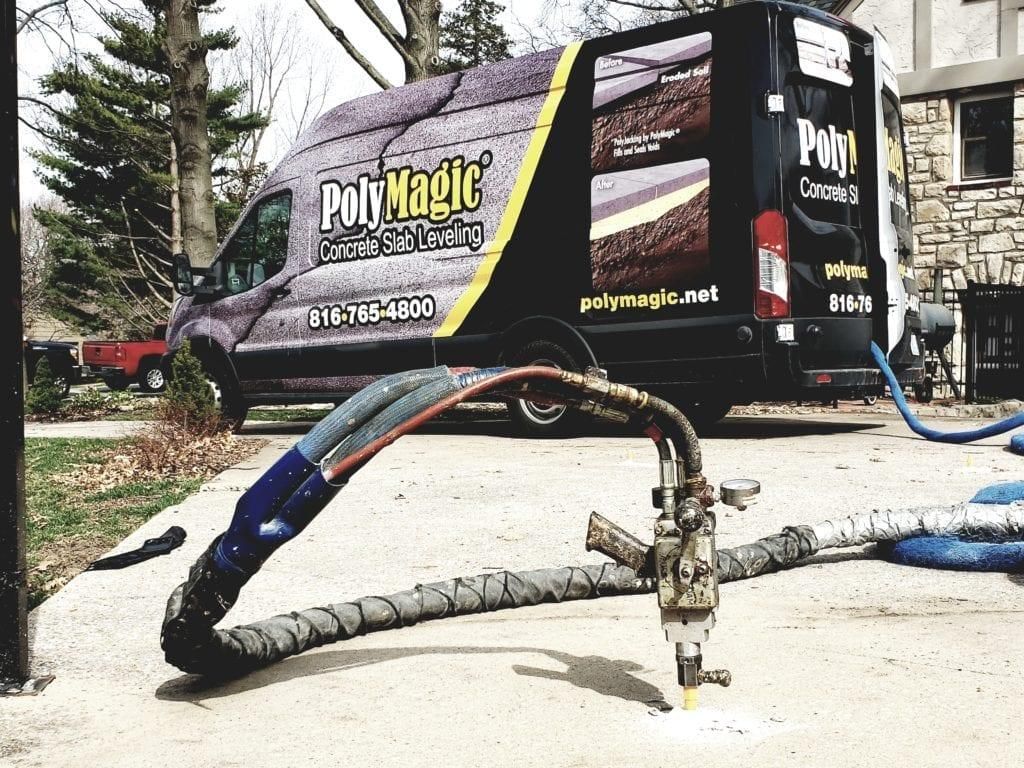
PolyMagic service truck with hoses spraying material on a driveway outdoors
By PolyMagic December 15, 2025
The Lifespan of Polyurethane Foam
By PolyMagic PierMagic December 9, 2025
Sinking Driveway in Mid-Missouri: Should You Repair or Replace Your Concrete?
By PolyMagic PierMagic December 3, 2025
Epoxy: Not Just for Crafting — Why It's the Real MVP of Floor Coatings
By PolyMagic PierMagic December 3, 2025
Winter Weather Warnings: How Cold Temps Can Damage Your Concrete (And What You Can Do About It)
By PolyMagic PierMagic December 3, 2025
Stamped Concrete Solutions: Protect and Restore with Duravel Coatings and Concrete Overlays
By PolyMagic PierMagic December 3, 2025
Long-Term Benefits of Protective Coatings on Concrete Floors with Epoxy
By PolyMagic PierMagic December 3, 2025
Transform Your Concrete Floors with PolyMagic’s Professional Epoxy Coating Services
Show More