The Benefits of Polyjacking: Why Polyurethane Foam Is the Smartest Way to Lift Concrete.
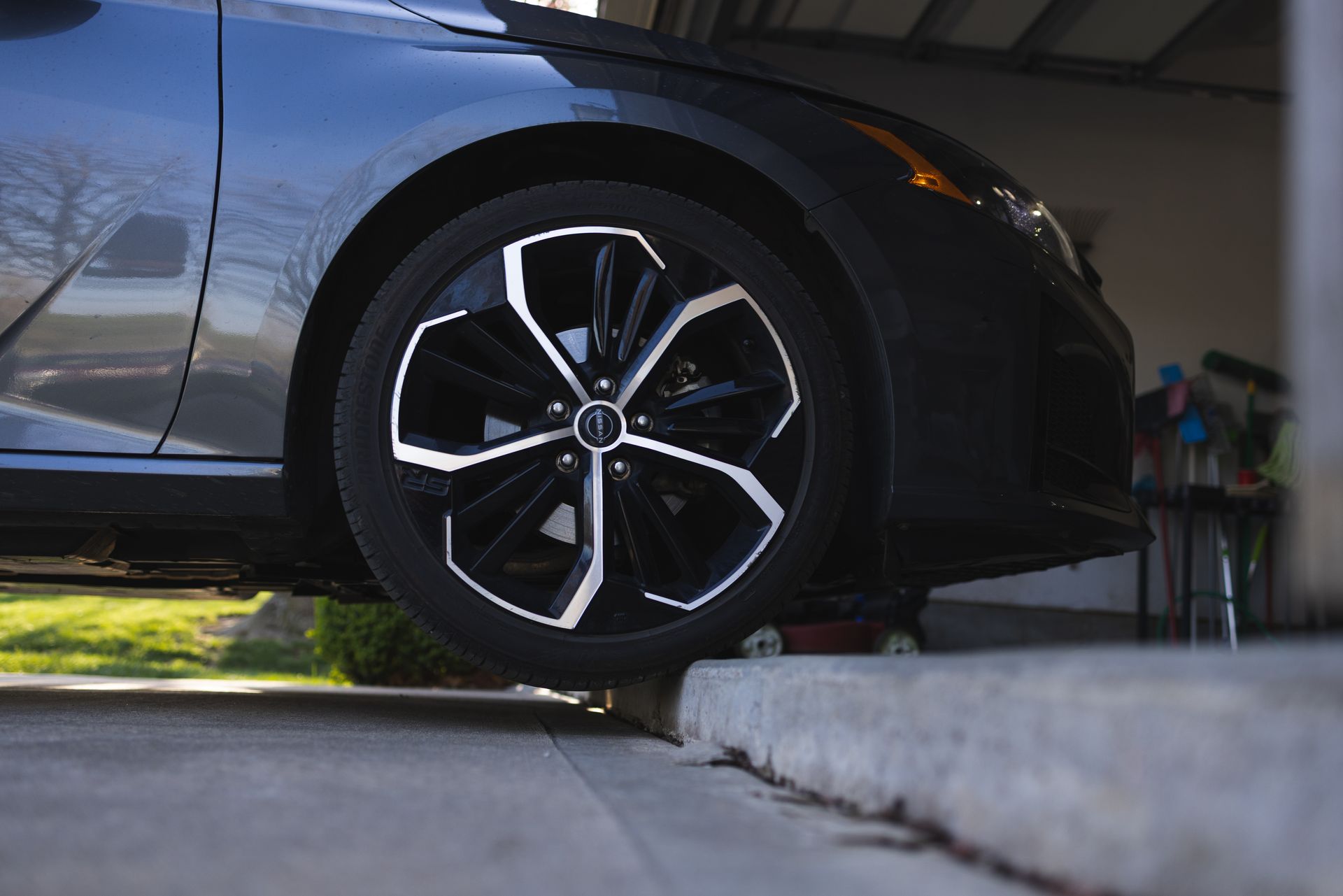
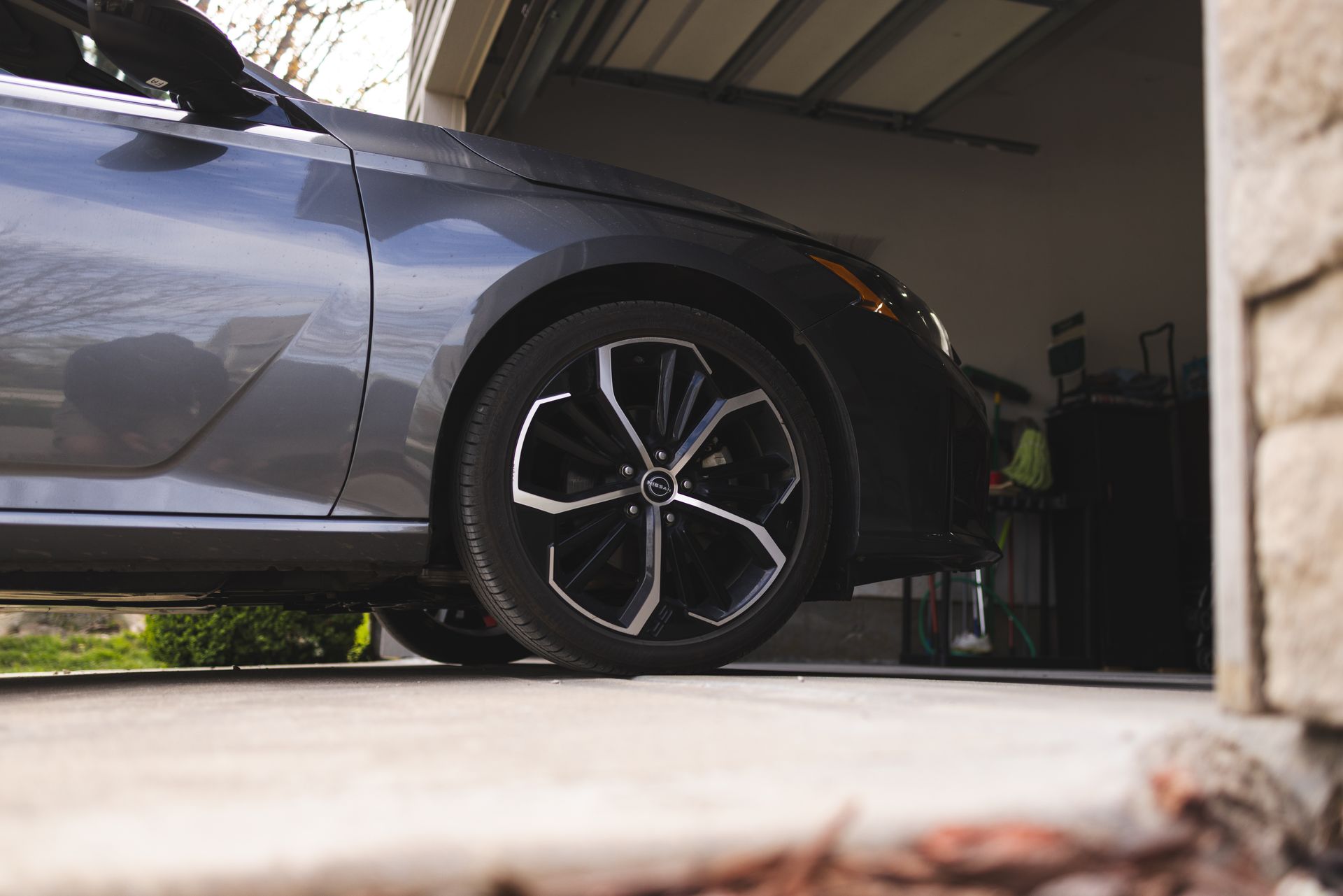
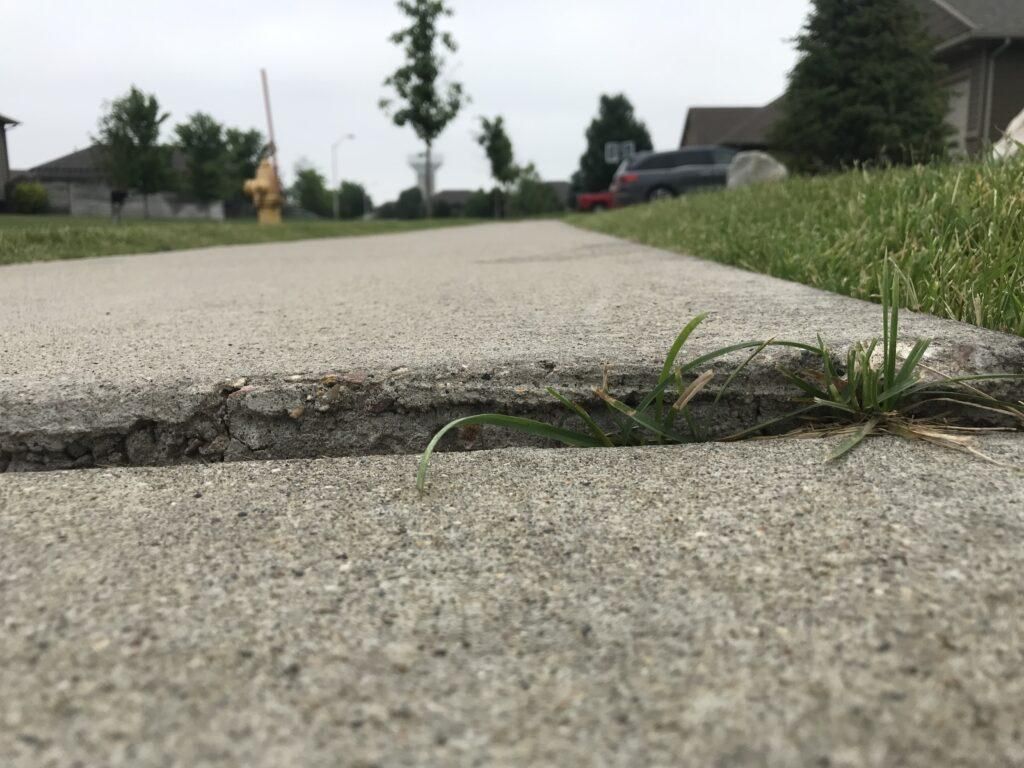
Sidewalks that trip you up. Driveways that scrape your car. Garage approaches that have sunk an inch too low. Sinking concrete is one of the most common property problems homeowners face across Kansas City and Mid-Missouri, and it tends to get worse the longer it sits. If you have noticed settled slabs on your property, you may be weighing your options.
Polyjacking, sometimes called foam leveling or poly leveling, has become the preferred concrete lifting method for good reason. It is faster, more precise, and longer-lasting than the traditional alternatives. This post explains how polyjacking works, why it delivers better results than older methods, and what makes it especially well-suited to the soil and climate conditions in Kansas City, Overland Park, Belton, Lee's Summit, Columbia, Jefferson City, and Lake of the Ozarks.

Why Concrete Sinks in the First Place
Understanding the problem helps you appreciate why the right repair method matters.
Concrete does not sink because it is weak. It sinks because the ground underneath it loses stability. The most common causes are soil erosion from heavy rain, voids left by decomposing tree roots, poor initial soil compaction during the original pour, and the expand-and-contract cycle that clay-heavy Missouri soil goes through with every rain and drought season. In the Kansas City Metro, repeated freeze-thaw cycles over winter accelerate the process, forcing water into micro-cracks that widen over time.

Once voids form beneath a slab, the concrete above begins to drop, tilt, or crack. The solution is not to remove the concrete. The solution is to fill those voids, re-support the slab, and lift it back to level.
What Is Polyjacking?
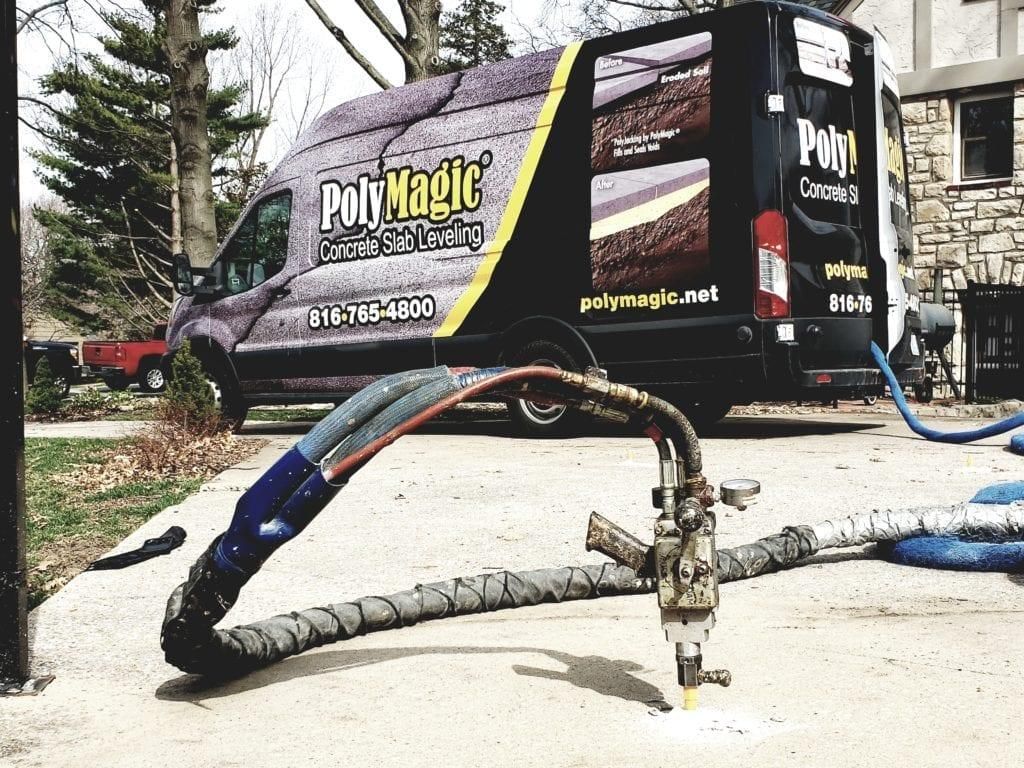
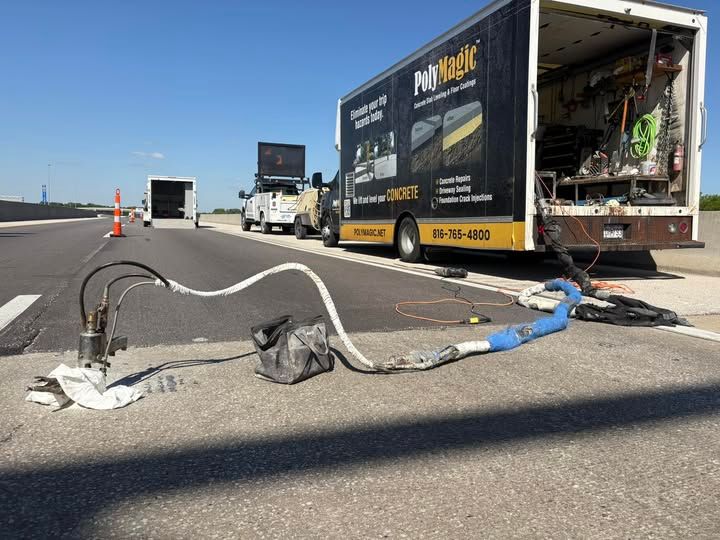
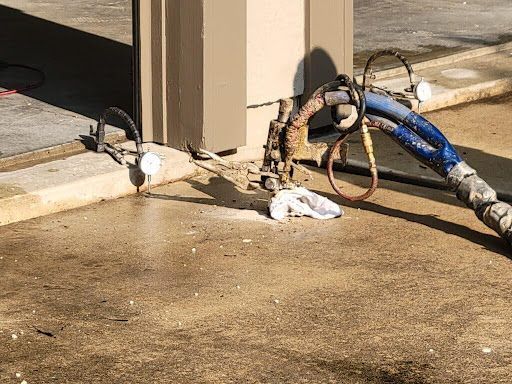
Polyjacking is a concrete lifting method that uses high-density polyurethane foam to fill voids beneath sunken slabs and raise them back to their original position. The process works like this: a technician drills small 5/8-inch holes through the concrete at targeted locations. A two-part polyurethane compound is then injected through those holes. The foam expands within seconds, fills the voids beneath the slab, and lifts the concrete as it hardens. Once the target lift is achieved, the holes are patched with mortar and the area is ready to use.
The whole process typically takes a few hours from start to finish. In most cases, the surface can handle foot traffic within 15 minutes and vehicle traffic within 30 minutes.
Polyjacking is also called foam jacking, foam leveling, or polyurethane foam injection. All refer to the same process.
The Benefits of Polyjacking
Precision and Control
One of the biggest advantages polyjacking has over traditional mudjacking is the level of control it provides. Because polyurethane foam expands predictably and the technician monitors the lift in real time, the slab can be raised to exactly the right height without over-lifting or under-lifting. This precision is especially important on driveways, garage approaches, pool decks, and sidewalks where exact grade matters for drainage and appearance.
Speed: Back in Use the Same Day
Polyjacking requires no demolition, no forms, no concrete pours, and no multi-day wait. A typical residential job can be completed in two to four hours. The polyurethane foam reaches full strength within minutes, meaning most homeowners can drive on a repaired driveway or walk on a lifted sidewalk before the crew has packed up the truck. For commercial properties or high-traffic areas, that same-day turnaround is a significant advantage.
Minimal Footprint
The 5/8-inch injection holes polyjacking requires are barely noticeable once patched, especially compared to the large holes needed for traditional mudjacking. No heavy equipment is needed on site. A single truck and a small crew handle the entire job. There is no mud, no significant mess, and no disruption to surrounding landscaping, driveways, or nearby structures.
Long-Lasting Results
Polyurethane foam does not wash away, compress over time, or react to temperature swings. It is waterproof, chemically stable, and resistant to the freeze-thaw cycles that are a reality of Missouri winters. When polyurethane foam fills a void beneath a concrete slab, it stays there. Polyjacking repairs routinely last 20 years or more when the underlying soil is reasonably stable. That durability significantly outpaces traditional mudjacking, which may need to be redone within two to five years as the mud slurry compresses or erodes.
Lightweight: No Added Stress on Weak Soil
Polyurethane foam weighs approximately 2 pounds per cubic foot. Traditional mudjacking slurry weighs roughly 100 pounds per cubic foot. That difference matters in Kansas City and Mid-Missouri, where clay-heavy, moisture-prone soils are already under stress. Adding 100 pounds of mud per cubic foot to a slab sitting over unstable or saturated ground can make the underlying problem worse. Polyjacking puts virtually no additional load on the soil, making it the right tool for areas with poor drainage or soft ground conditions.
Waterproof and Environmentally Stable
Polyurethane foam is not affected by moisture. It will not wash out after a heavy rain, absorb water over time, or break down from soil contact. This is critical in Mid-Missouri, where high moisture levels and clay-rich soils around Jefferson City, Columbia, and Lake of the Ozarks create persistent ground movement. It is equally important in the Kansas City Metro, where sloped lots and freeze-thaw cycles keep groundwater moving throughout the year. Once the foam is in place, it stays in place.
Versatile Applications
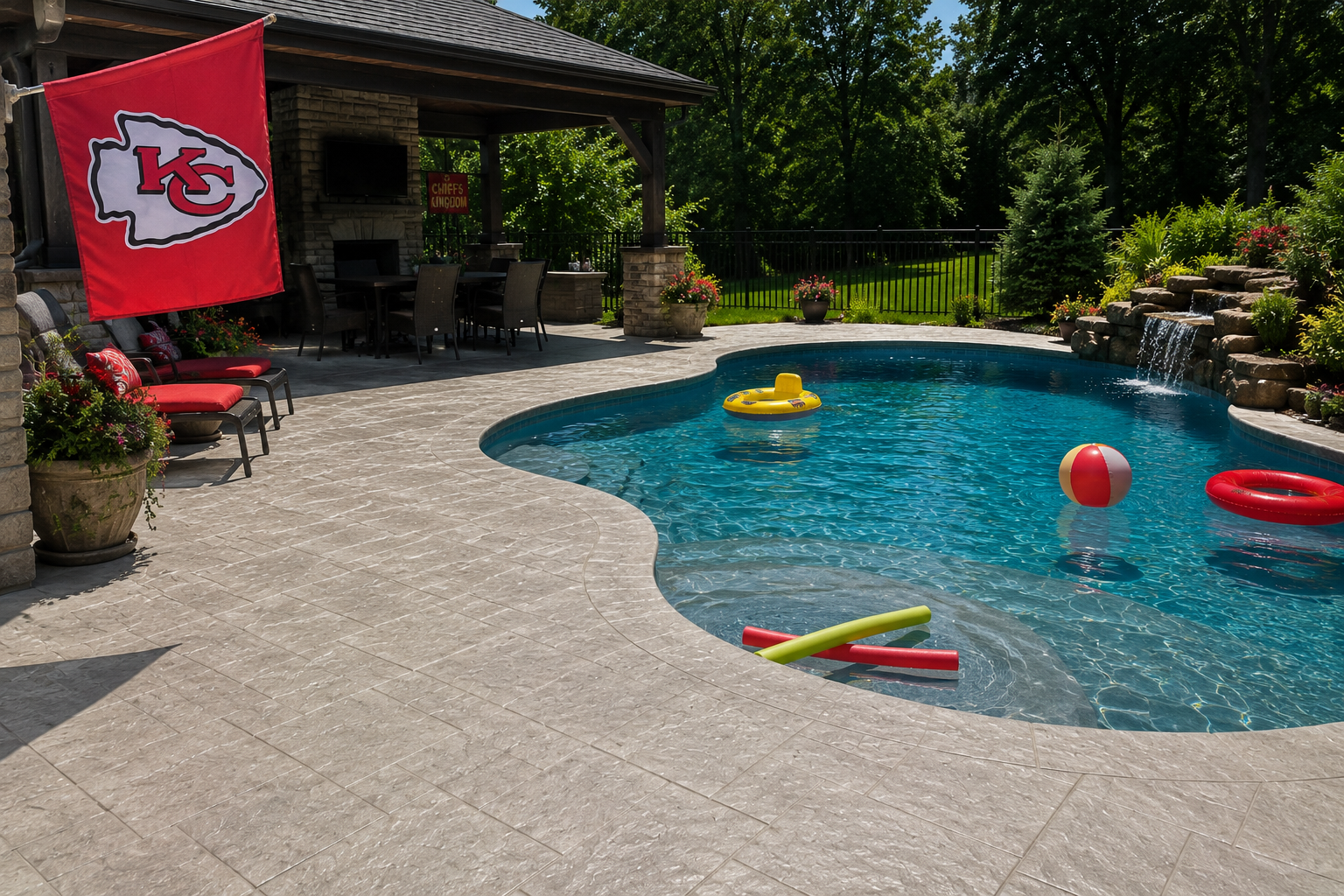
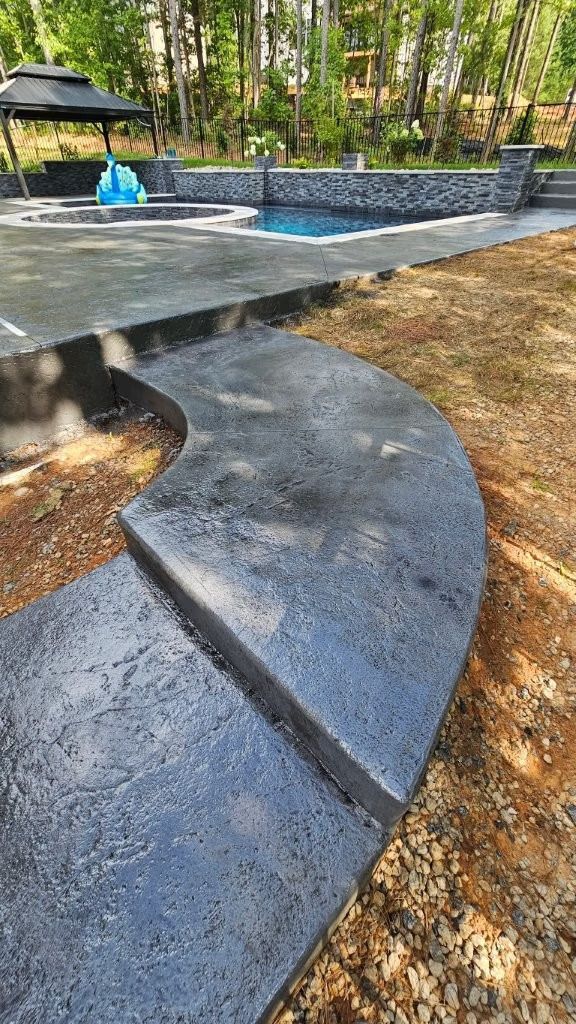
Polyjacking works across a wide range of concrete surfaces and structures. Common applications include driveways, sidewalks, garage approaches, patios, pool decks, porches, interior commercial floors, warehouse slabs, and parking lots. Any concrete slab that has settled due to void formation or soil erosion is a potential polyjacking candidate, provided the concrete itself is structurally intact.
Cost-Effective Long-Term
Polyjacking costs more upfront than mudjacking. However, when you factor in the longevity difference, the math shifts. A mudjacking repair that needs to be redone twice in ten years will cost significantly more than a polyjacking repair that holds for two decades. For homeowners in Belton, Overland Park, Columbia, or Jefferson City who want a fix they can count on, polyjacking is the more economical choice over time.
When Polyjacking Is Not the Right Solution
Polyjacking is not appropriate for every situation. If the concrete slab itself is broken apart, shifted into disconnected pieces, or has structural damage beyond surface cracking, lifting it will not produce a stable result. In those cases, replacement is the correct path. Additionally, extremely large voids or deeply saturated soils near bodies of water may not hold a foam lift reliably over time. A professional evaluation will confirm whether your slab is a good candidate, and with a free estimate from PolyMagic, the process couldn't be simpler.
What the Polyjacking Process Looks Like
After an inspection to confirm the cause of sinking and the suitability of the slab, the technician marks injection points and drills the 5/8-inch holes at strategic locations. The two-part polyurethane is injected and the lift is monitored continuously. Foam volume and injection points are adjusted in real time to ensure an even, controlled rise. Once the target grade is reached, holes are filled with mortar, the site is cleaned up, and the area is ready to use within minutes.

The entire process requires one truck, minimal equipment, and leaves no significant trace beyond the small patched holes.
Ready to Lift Your Concrete? PolyMagic Can Help.
PolyMagic specializes in polyjacking and concrete lifting for homeowners and businesses across the Kansas City Metro, including Overland Park, Belton, and Lee's Summit, and across Mid-Missouri in Columbia, Jefferson City, and Lake of the Ozarks. We offer free estimates and will give you a clear, honest assessment of whether polyjacking is the right solution for your property.
Call our Kansas City office at
816-762-7659 or our Jefferson City office at
573-708-7551, or reach out online to schedule your free evaluation. Sinking concrete does not have to mean a full replacement. In most cases, a smarter, faster, and more affordable solution is already available.