Epoxy vs. Polyaspartic vs. Polyurethane Floor Coatings. What Kansas City and Mid-Missouri Homeowners Need to Know
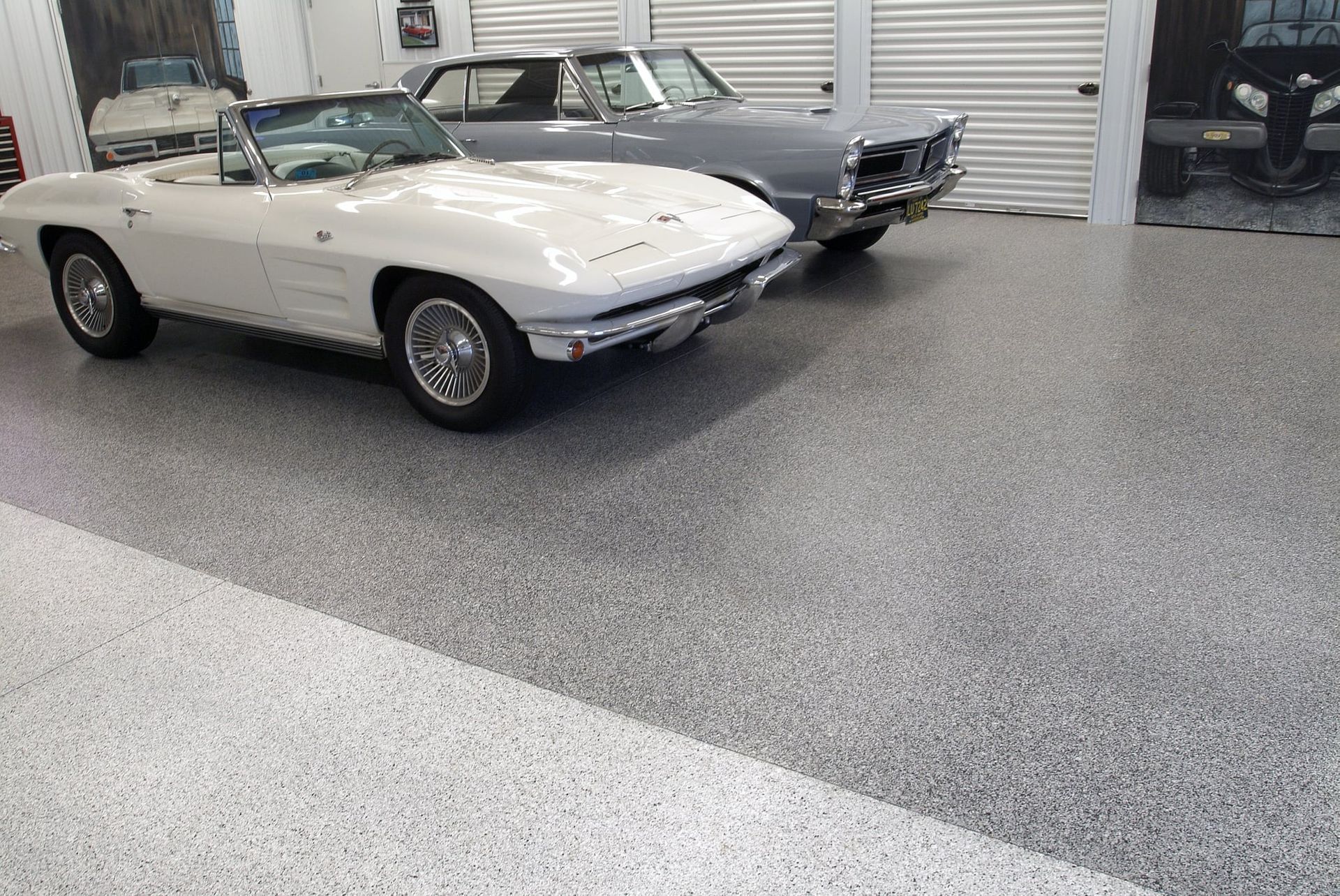
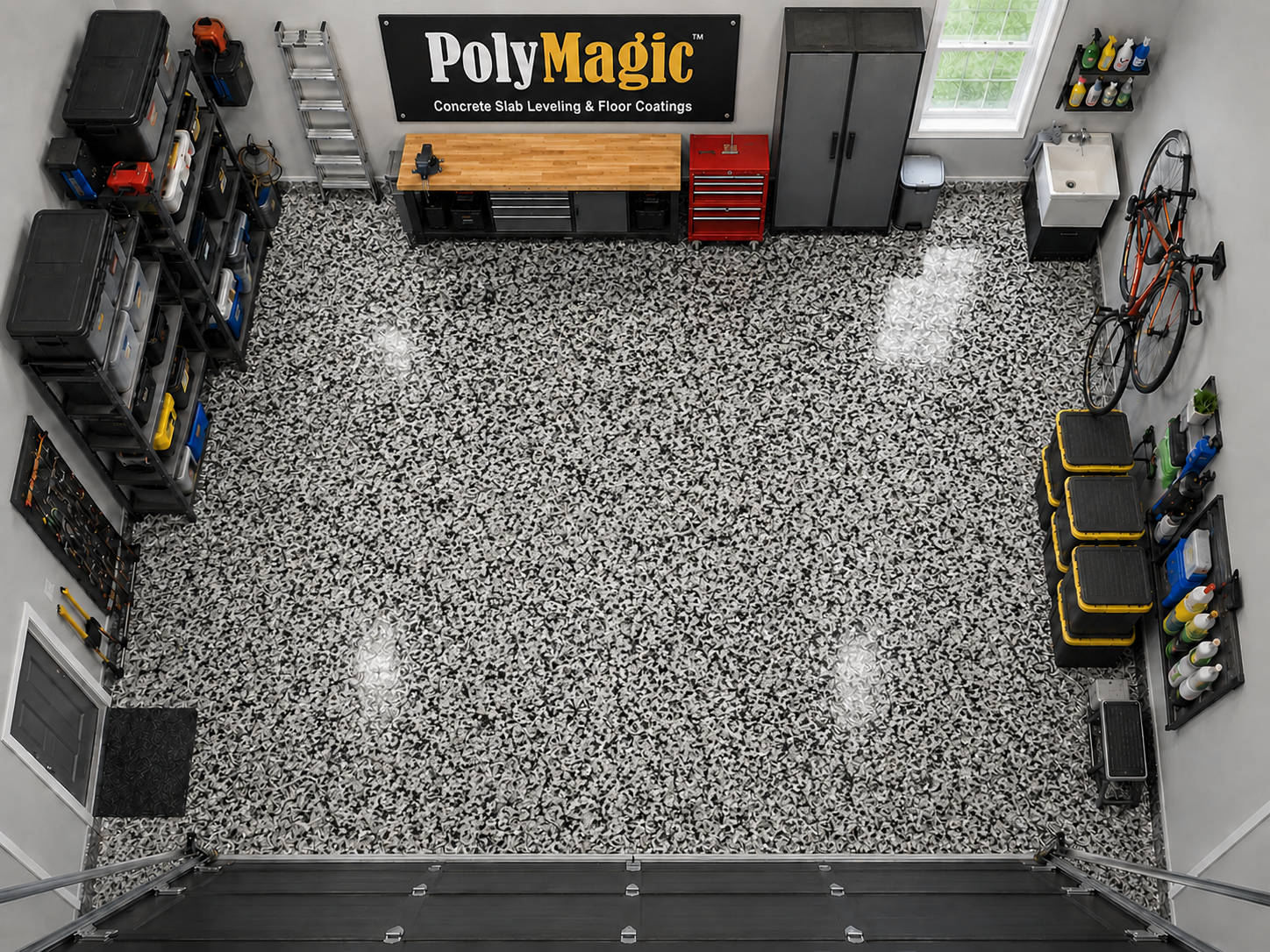
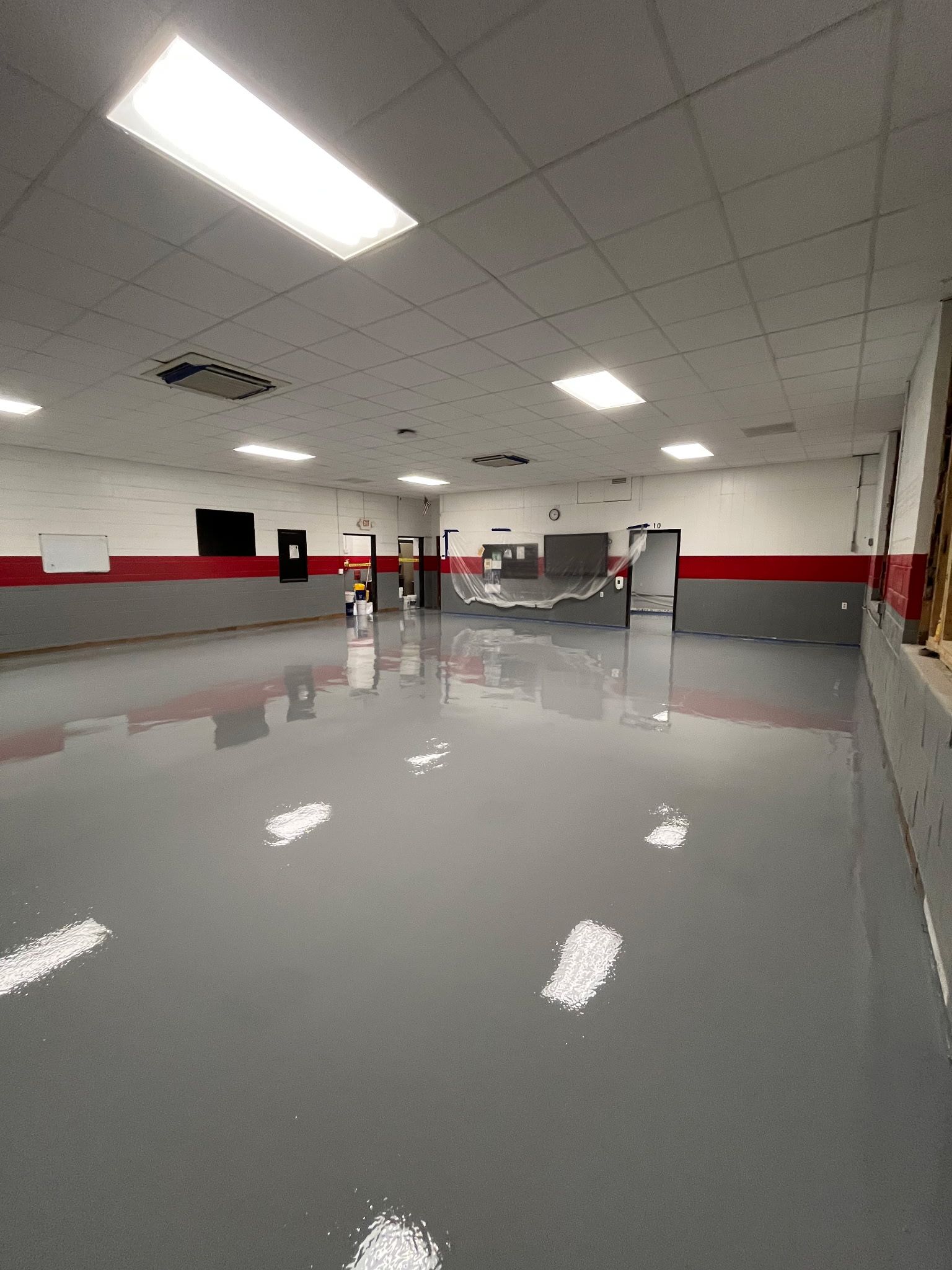
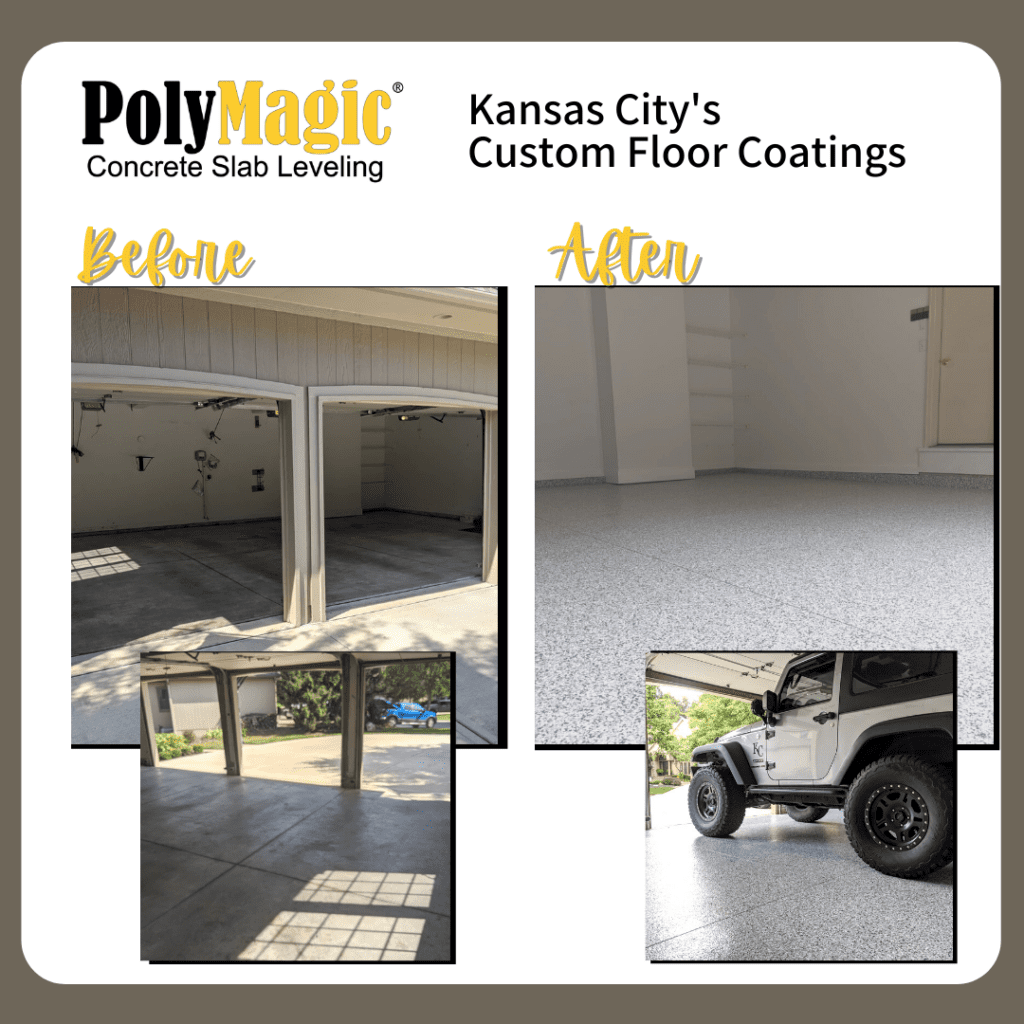
You have probably seen the before-and-after photos. A dingy, oil-stained garage slab transforms overnight into a sleek, showroom-quality floor that makes you think twice about parking your car on it. But once you start shopping for that upgrade, you quickly run into a lot of terminology: epoxy, polyaspartic, polyurethane, polyurea, flake systems. What is the actual difference, and which coating is right for your garage, patio, basement, or commercial space in Kansas City or Mid-Missouri?
This post breaks down all three coating types honestly so you can walk into a conversation with a contractor knowing exactly what questions to ask.
What Are Concrete Floor Coatings and Why Do They Matter?
Bare concrete is porous, stains easily, and breaks down under repeated exposure to vehicle traffic, oil, road salt, and freeze-thaw moisture. A professional floor coating bonds to the surface and creates a hardened, protective layer that resists all of those forces while dramatically improving how the space looks.
The three main coating types used in residential and commercial applications across Kansas City, Overland Park, Jefferson City, Columbia, and Lake of the Ozarks are
epoxy, polyaspartic, and polyurethane. Each has a distinct chemistry, set of strengths, and ideal use case. They are not interchangeable, and the one that works best depends on your space, your budget, your climate exposure, and how quickly you need to get back to using the floor.
Epoxy Floor Coatings
Epoxy has been the standard garage floor coating for decades. It bonds to concrete both chemically and mechanically, which gives it excellent adhesion. It self-levels well, filling minor surface imperfections and creating a smooth, bright, cleanable surface. Epoxy is generally the most affordable professional coating option per square foot, and it handles heavy loads and chemical spills reasonably well.

That said, epoxy has real limitations that matter in the Kansas City Metro and Mid-Missouri climate. It is not UV-stable, meaning it yellows and fades when exposed to sunlight. For a garage with windows or an exterior-facing door, or any outdoor application, epoxy will deteriorate visibly over time. It also requires temperatures above 50 degrees Fahrenheit during installation, which limits the installation window in Missouri winters. Cure time is long: a professionally applied epoxy system typically needs 24 to 72 hours before light foot traffic and up to a week before vehicle traffic.
DIY epoxy kits sold at big-box stores deserve a separate mention. These are not the same product professionals use. They are thinner, bond less reliably, and are notorious for peeling and flaking within a year or two, especially in high-moisture environments or on concrete that was not properly prepared. If you have seen a garage floor that looks like it is shedding skin, it was almost certainly a DIY epoxy kit. Professional installation with industrial-grade materials produces a different result.
Epoxy is a solid baseline coating but rarely the best long-term choice when better options exist for the same budget range.
Polyaspartic Floor Coatings
Polyaspartic is where the industry has largely moved for residential garage floors, pool decks, and outdoor concrete surfaces. It is a subcategory of polyurea chemistry and represents a meaningful upgrade over epoxy in almost every performance category that matters to homeowners in Kansas City and Mid-Missouri.
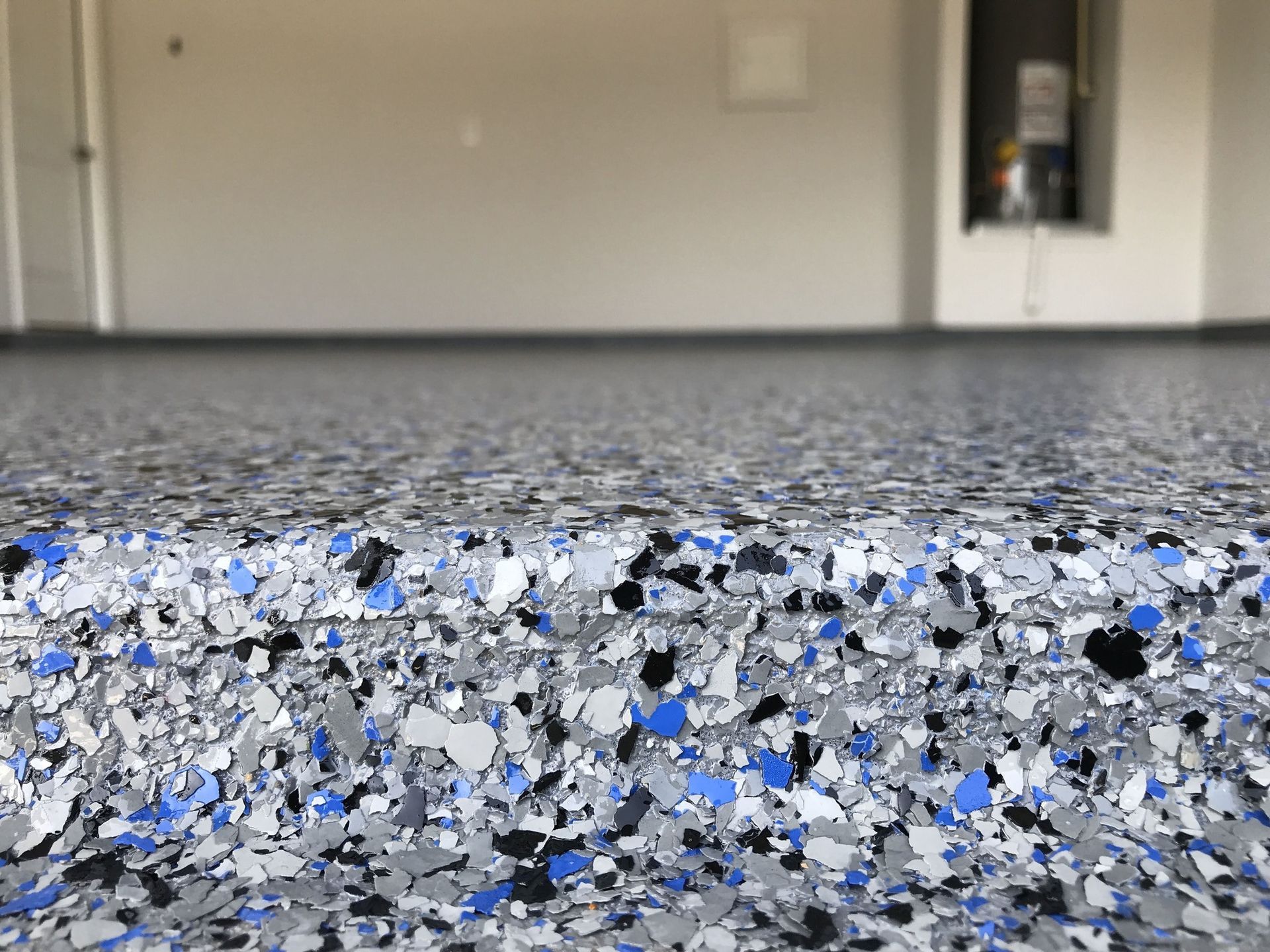
Polyaspartic coatings are UV-stable, which means they will not yellow or fade in sunlight. They cure far faster than epoxy: most polyaspartic systems reach walkable hardness within four to six hours and can handle vehicle traffic the same day. That rapid cure also means the coating system can be completed in a single day, including surface preparation, primer, color flake broadcast, and topcoat. For a homeowner who needs their garage back quickly, this is a significant advantage.
Durability is the other major differentiator. Polyaspartic is roughly ten times more impact-resistant than standard epoxy, which matters in a garage where tools get dropped, vehicles roll in with road salt and moisture on their tires, and temperatures swing dramatically between Missouri summers and winters. The coating maintains its flexibility across those temperature swings, which means it resists cracking and peeling in ways that rigid epoxy systems cannot match.
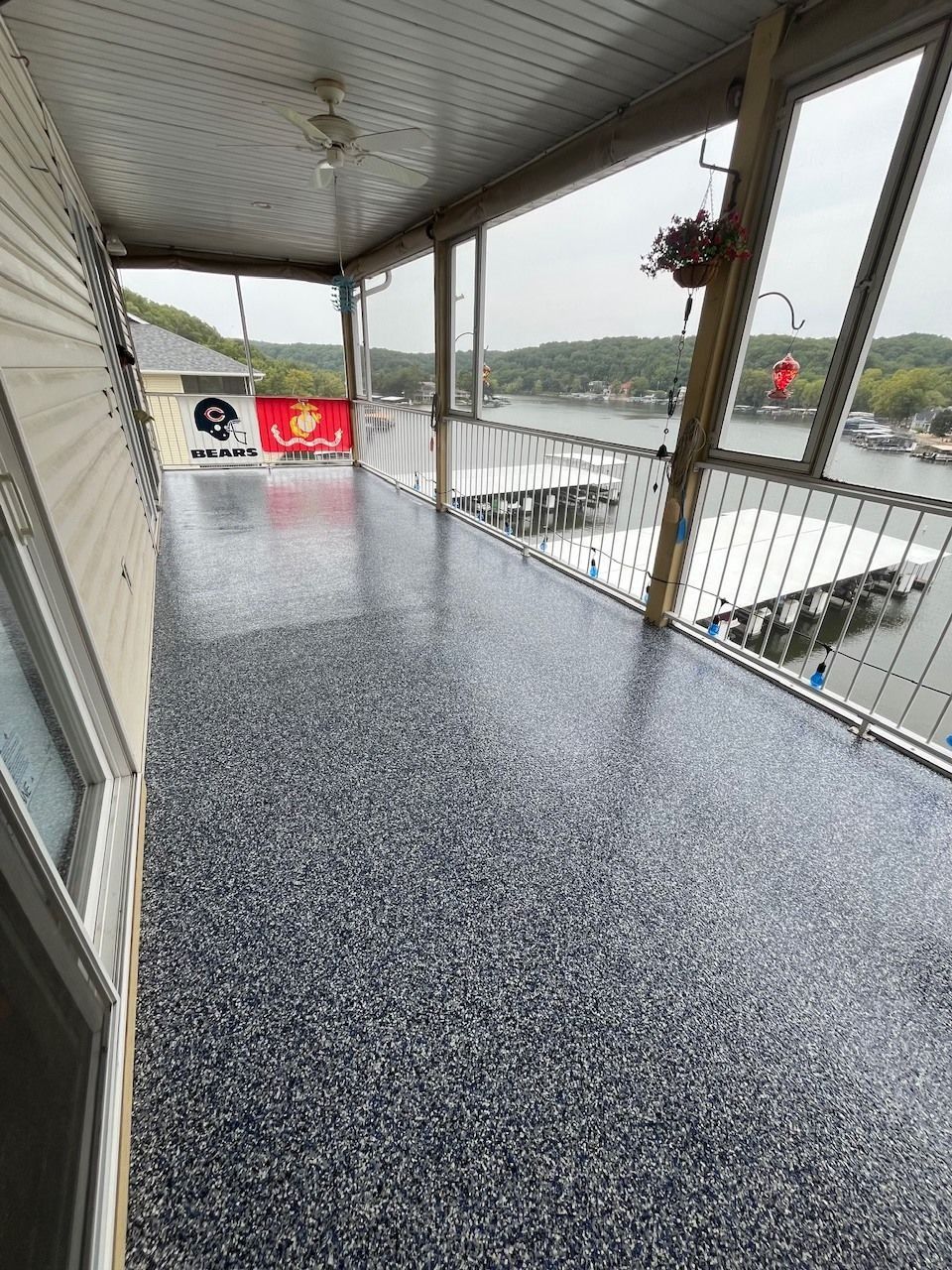
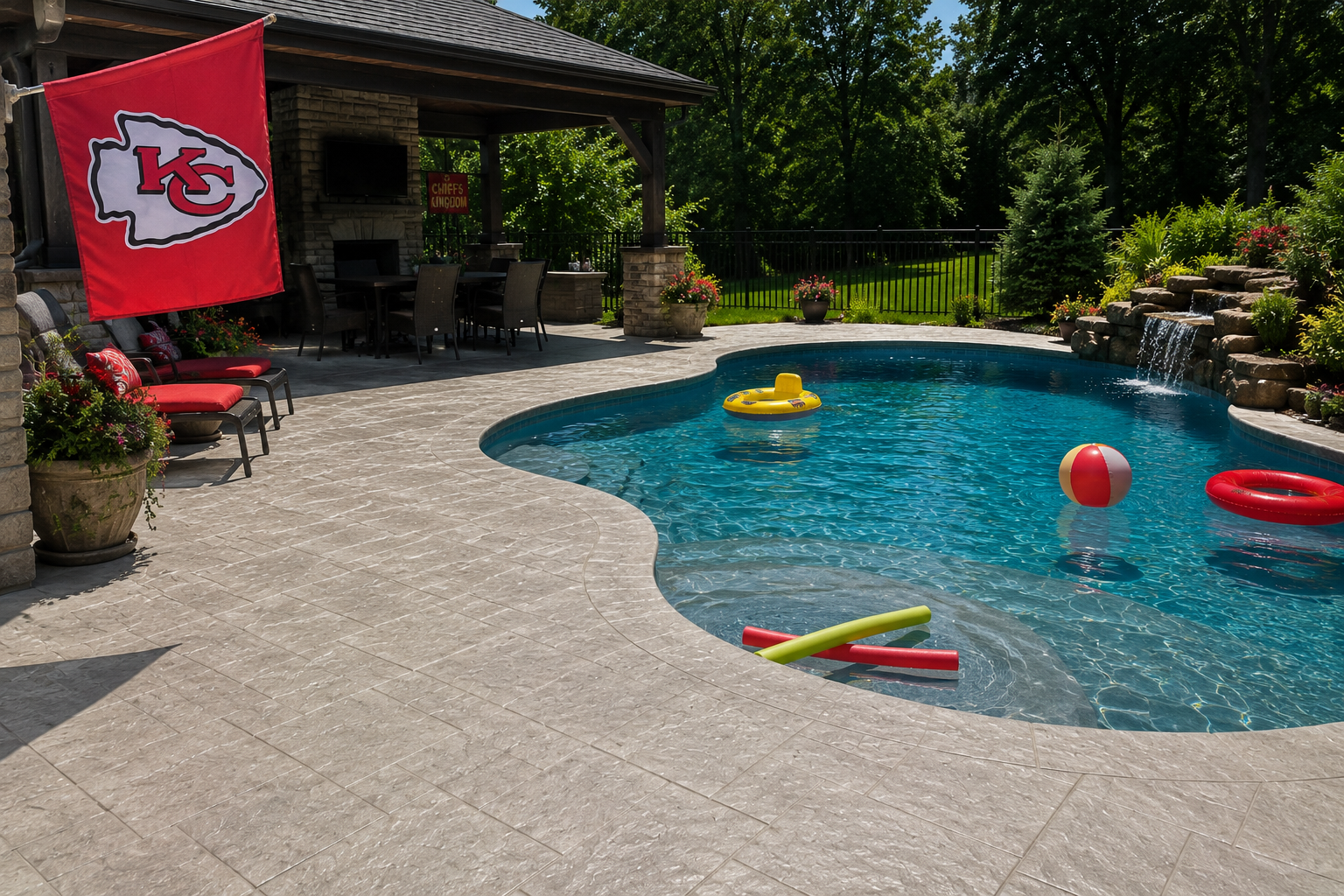
Non-slip texture additives can be mixed into a polyaspartic topcoat, making it well-suited for pool decks and garage areas in Overland Park, Lee's Summit, Jefferson City, or anywhere else that sees moisture, ice, or spills. The color flake systems used with polyaspartic also distribute evenly across the entire floor surface. With epoxy, the base coat color often shows through in places where the flake density is lower.

The tradeoff is cost. Polyaspartic materials cost more than epoxy, and the fast cure window means the application requires experienced installers who work quickly and precisely. This is not a system where errors can be corrected after the fact. PolyMagic uses polyaspartic systems as the primary coating for residential garage floors because the combination of same-day return to use, UV stability, and long-term durability consistently produces better outcomes for homeowners across both markets.
Polyurethane Floor Coatings
Polyurethane sits in its own category and is most commonly used as a topcoat layer in multi-coat systems rather than as a standalone floor coating. Its primary strengths are UV resistance, high gloss retention, and exceptional resistance to abrasion and chemical exposure over a very long lifespan: 20 to 30 years with proper maintenance.
Where polyurethane particularly shines is in the final protective layer. When applied over an epoxy or polyaspartic base system, a polyurethane topcoat extends the life of the entire floor and makes it easier to clean. Dirt, fluids, and chemicals have a harder time penetrating a polyurethane surface than a standard epoxy topcoat.
Polyurethane is also more flexible than epoxy, which makes it better suited to floors that experience temperature fluctuations. For an exterior patio in Mid-Missouri that faces both summer heat and hard freezes, or a warehouse floor in Kansas City that sees constant thermal stress, polyurethane holds up where stiffer coatings can crack.

The downsides are higher material cost and longer cure time than polyaspartic. Application also requires a skilled professional because polyurethane has less tolerance for surface preparation errors than epoxy. For most residential garage applications, polyaspartic is the more practical choice. But for commercial environments, high-end showroom floors, or anywhere requiring the absolute longest-lasting topcoat, polyurethane earns its place in the system.
How to Choose: The Right Coating for Your Space
The coating decision comes down to a few key factors specific to your project.
For a residential garage:
Polyaspartic is almost always the right choice. Same-day installation, UV stability, superior durability, and a finish that holds its appearance over years of vehicle traffic and Missouri weather make it the clear front-runner for homeowners in Overland Park, Belton, Columbia, Jefferson City, and Lake of the Ozarks.
For outdoor concrete (patios, pool decks, driveways):
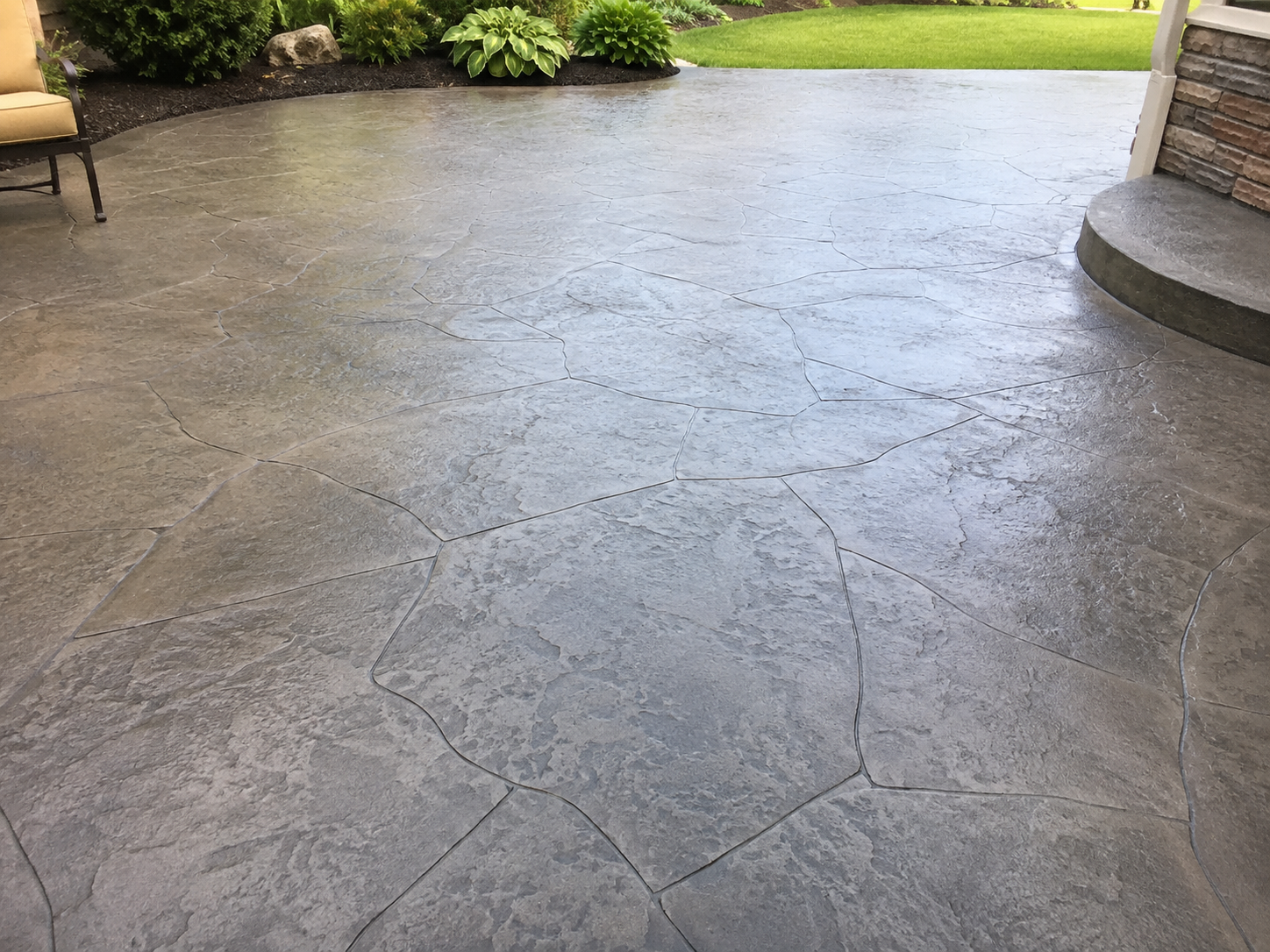
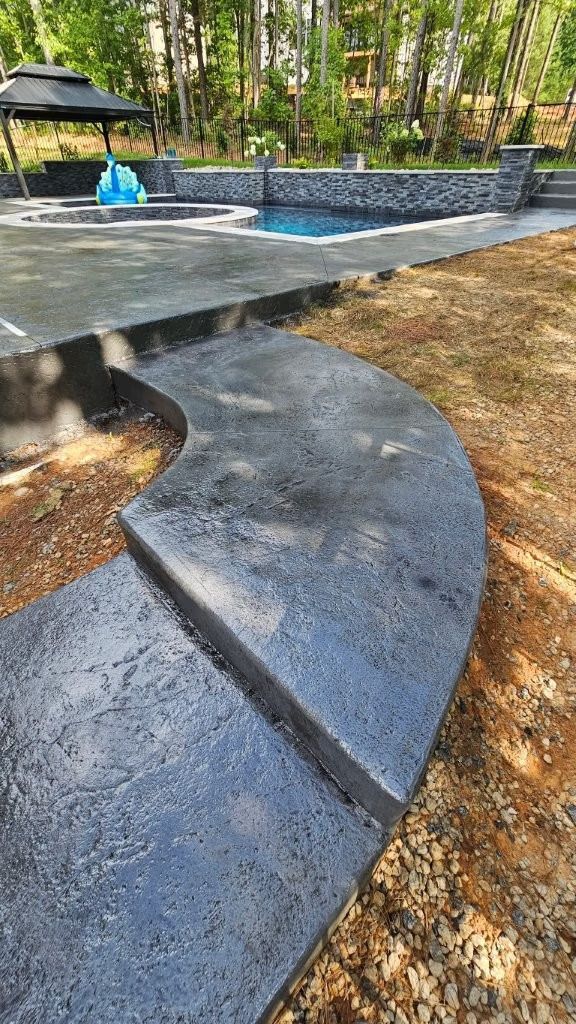
Any coating exposed to direct sunlight needs UV stability. Epoxy is not an option here. Polyaspartic with a non-slip additive is the standard choice. Polyurethane topcoats can be added for additional longevity.
For commercial or industrial floors:
Durability and chemical resistance are the priority. Polyurethane systems, sometimes over an epoxy base, deliver the longest lifespan for warehouse floors, showrooms, and industrial spaces in the Kansas City Metro and throughout Mid-Missouri.
For basements and interior spaces:
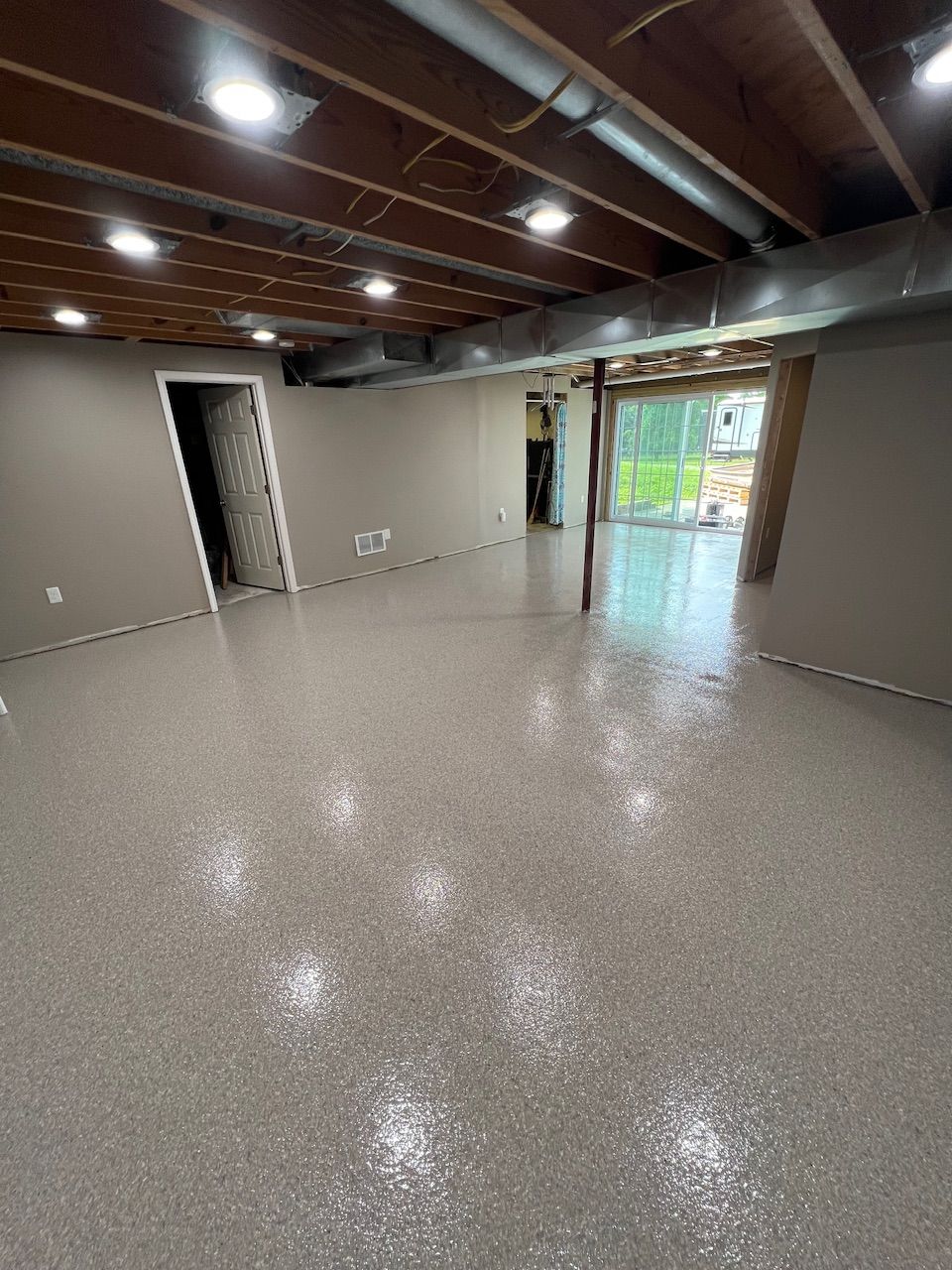
Epoxy remains a viable option in temperature-controlled interior environments with no UV exposure, though polyaspartic is still the preferred choice for anyone who wants the floor done and usable the same day.
Floor Coating On budget:
Epoxy is the lowest upfront cost, but factor in that it will need to be redone sooner and may need to be stripped if peeling begins. Over a ten-year horizon, polyaspartic often costs less per year of reliable performance.
One More Thing: Concrete Condition Before Coating
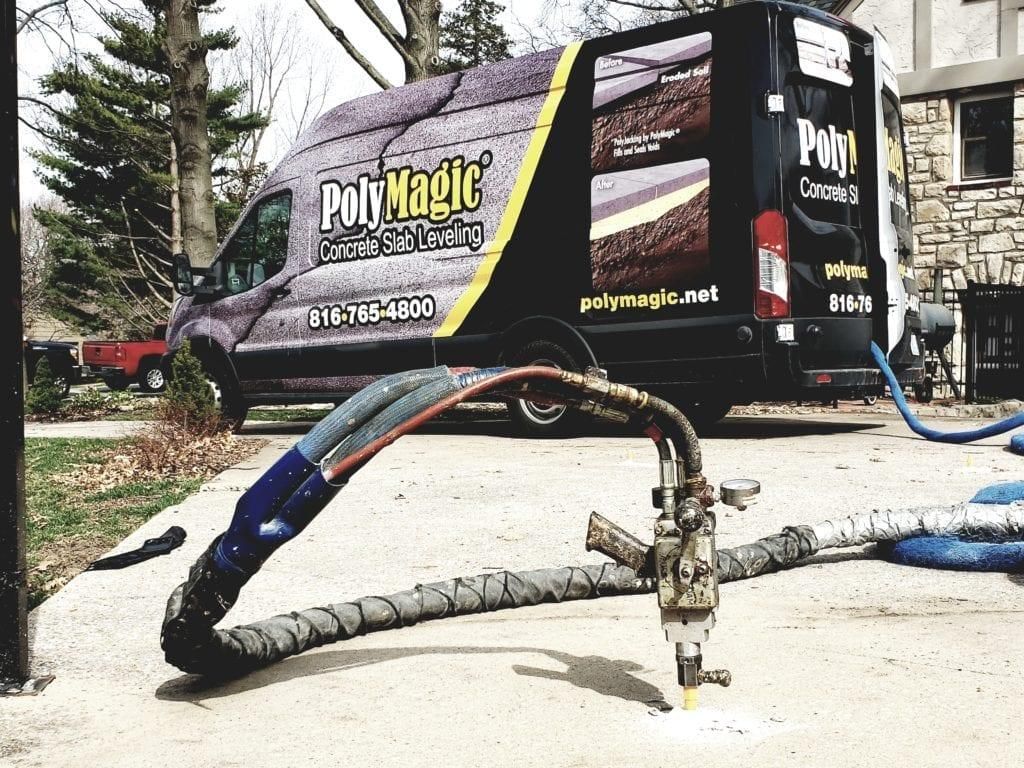
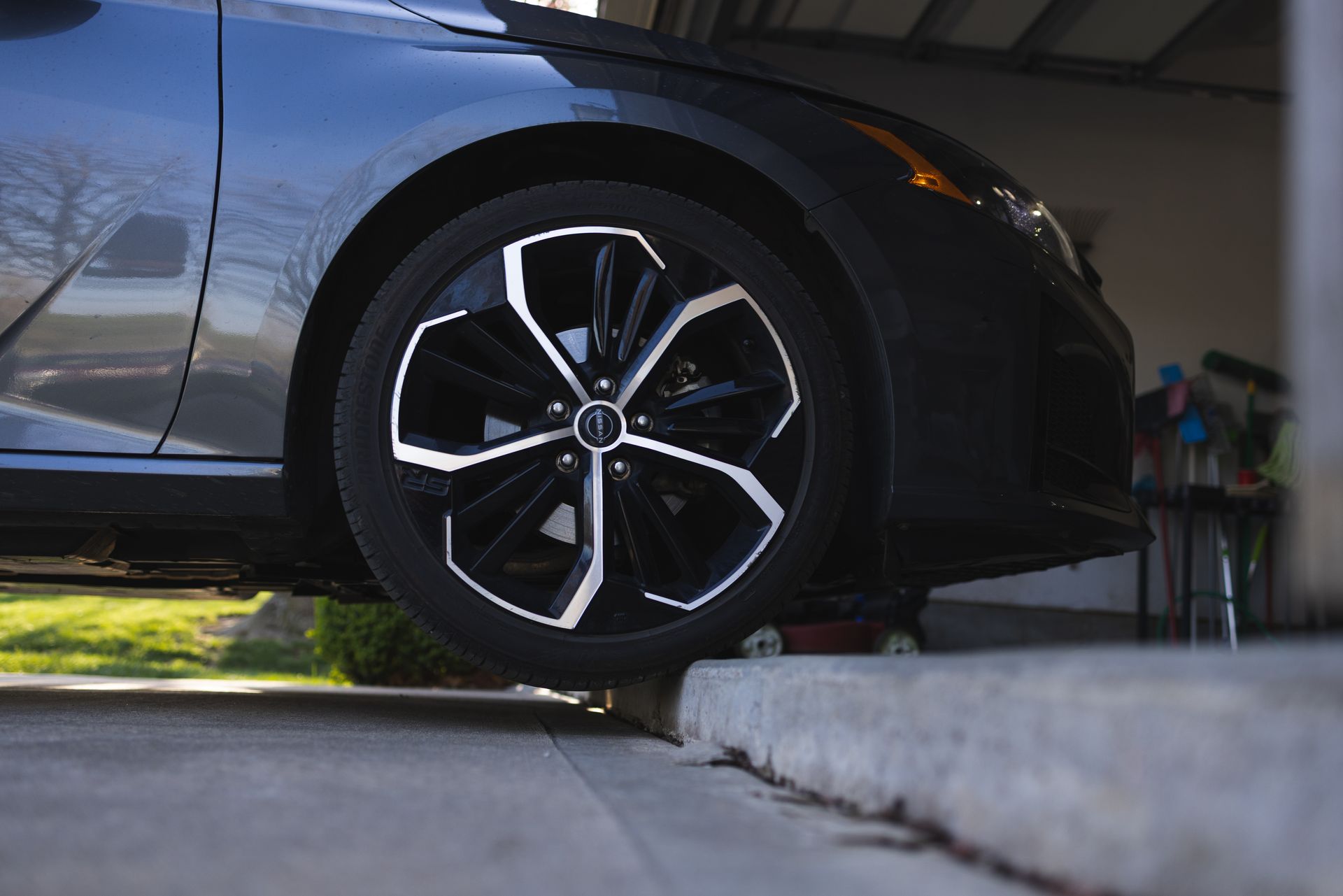
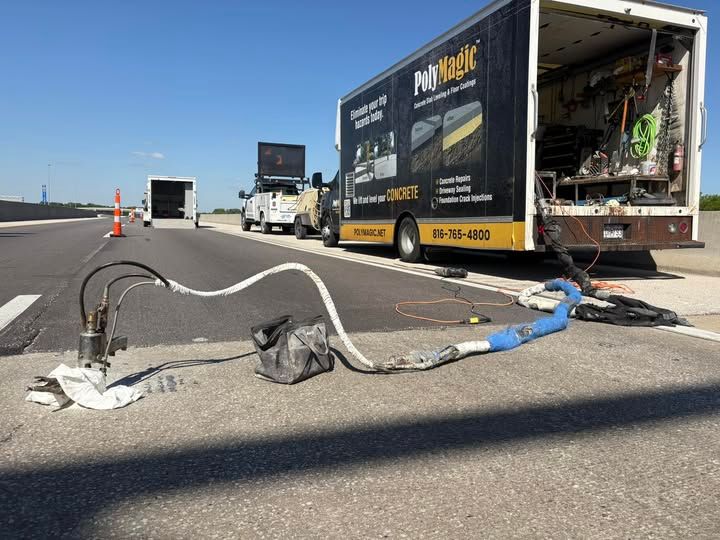
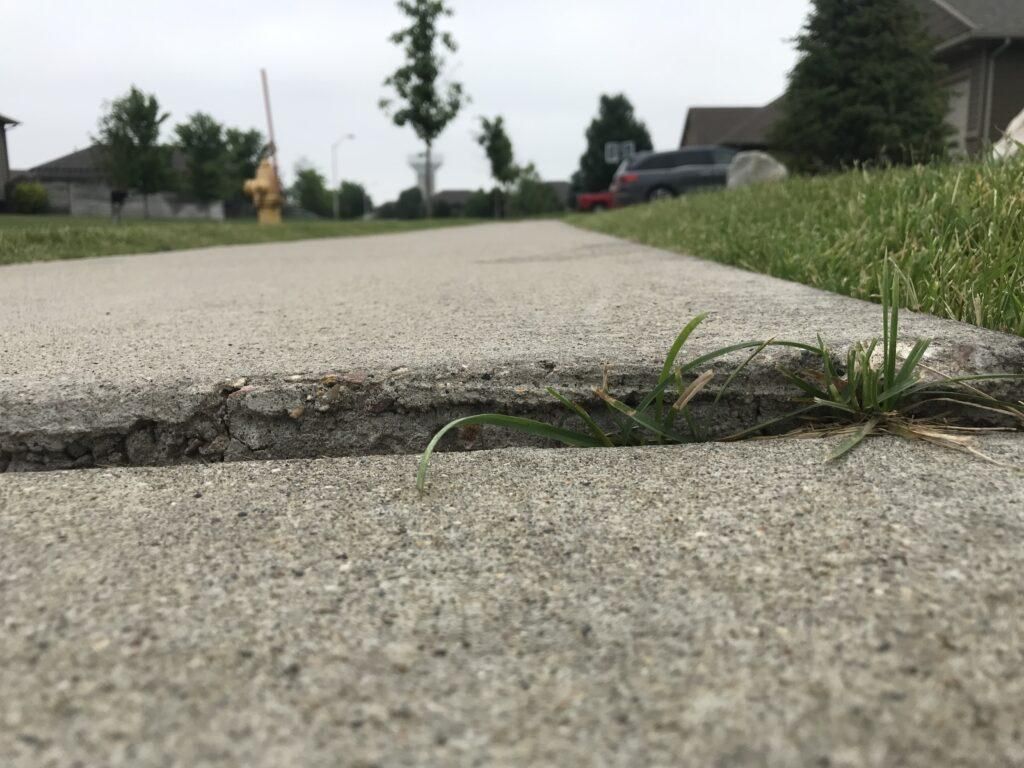
No floor coating performs well over concrete that is uneven, cracked, or has sinking sections. Before any coating goes down, the slab needs to be in good structural condition. If your garage floor has settled, is tilted, or shows significant cracking, PolyMagic can address those issues with polyjacking or crack injection before the coating project begins. Getting the concrete right first is what separates a coating that lasts decades from one that fails in a few years.
Get a Free Quote from PolyMagic
PolyMagic installs professional polyaspartic, epoxy, and polyurethane floor coating systems for homeowners and businesses across the Kansas City Metro, including Overland Park, Belton, and Lee's Summit, and throughout Mid-Missouri in Columbia, Jefferson City, and Lake of the Ozarks. We also offer temporary storage for your belongings during the project.
Call our Kansas City office at 816-762-7659 or our Jefferson City office at 573-708-7551 to schedule your free estimate. Whether you are upgrading a garage, a basement, a patio, or a commercial floor, we will help you choose the right system for your space and get it done right the first time.