My Driveway Is Sinking: Should You Repair or Replace Sunken Concrete?
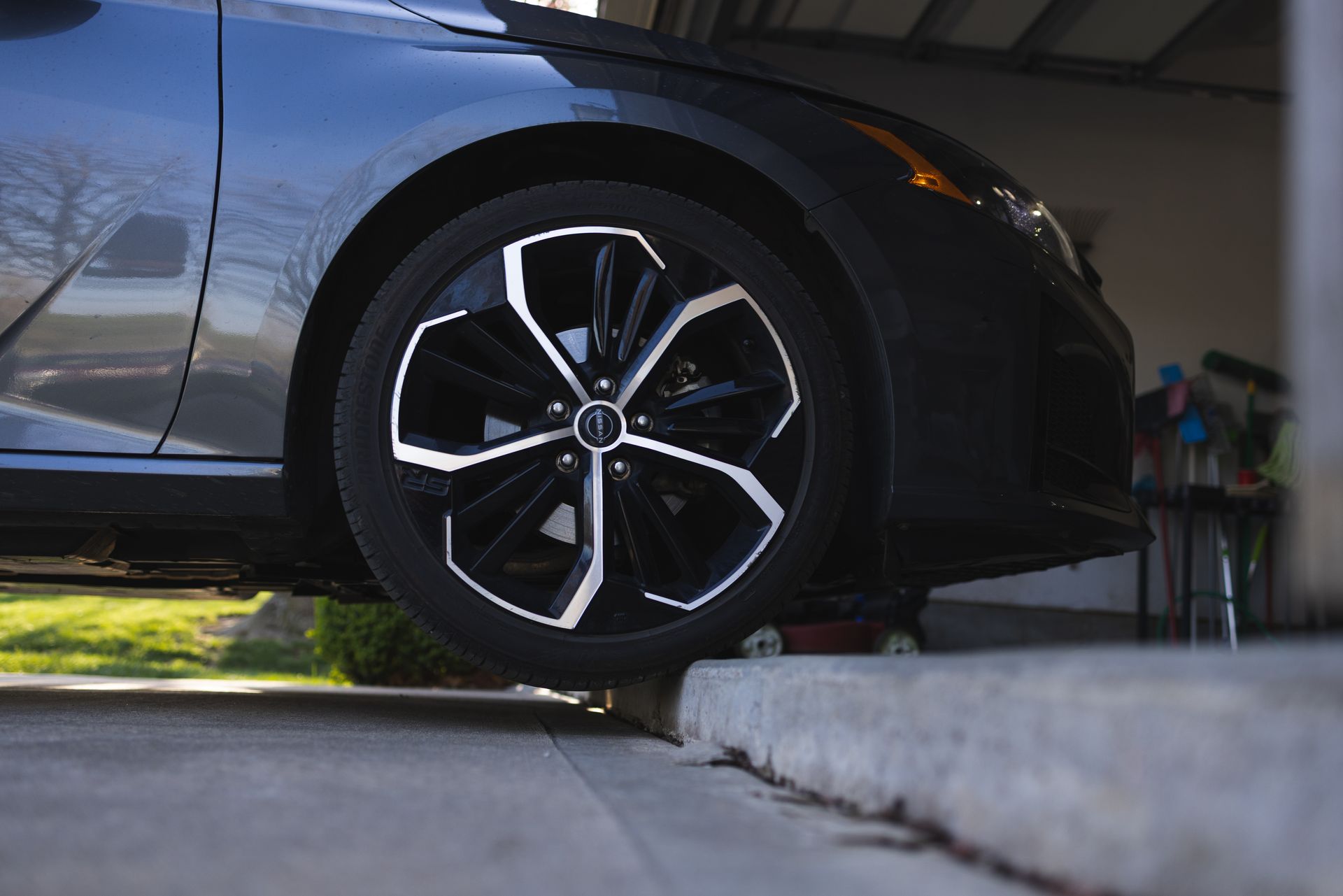
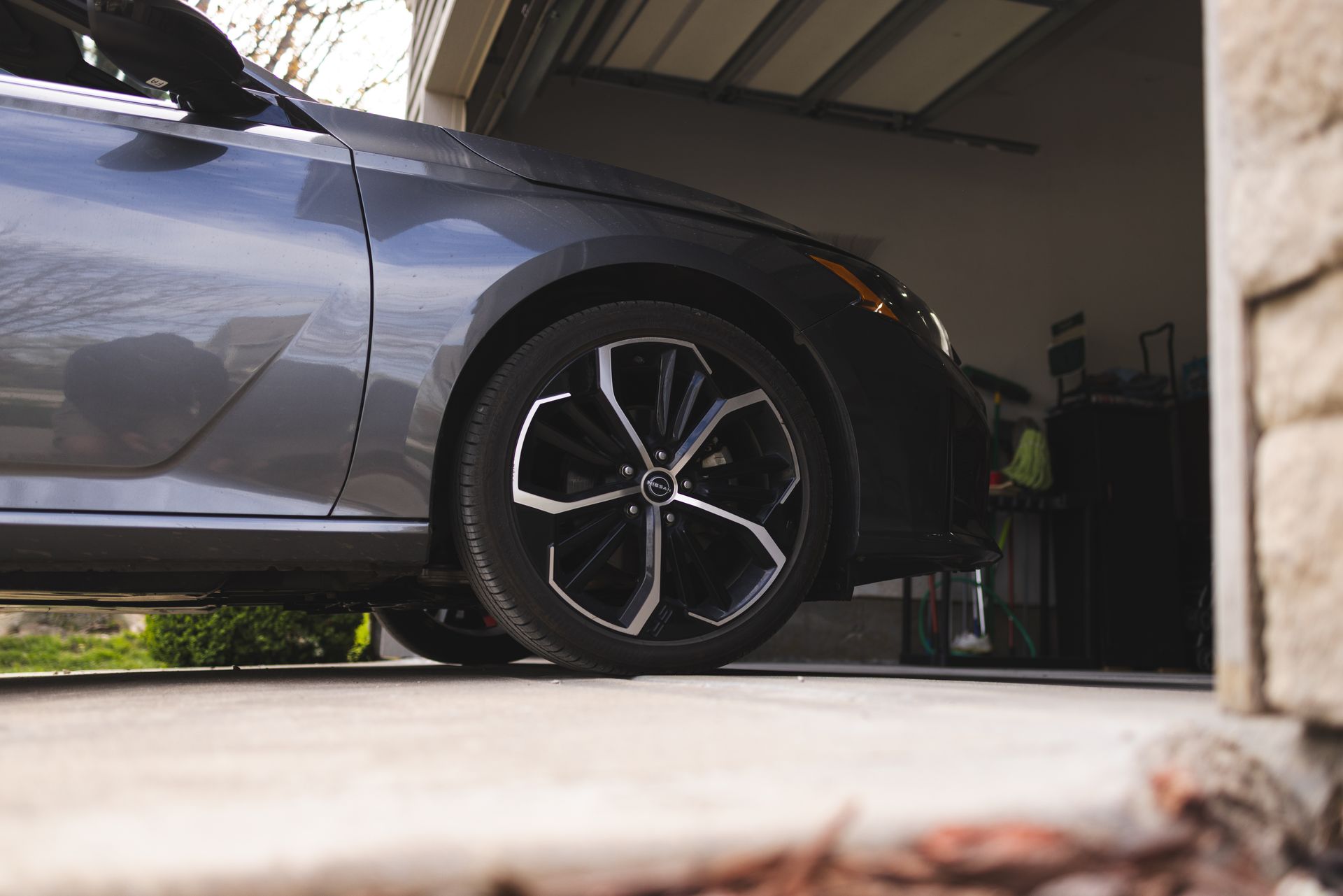
A sinking driveway has a way of catching you off guard. What starts as a subtle low spot near the garage or a hairline crack along a seam can turn into an uneven, vehicle-scraping hazard faster than most homeowners expect. Whether you are in Overland Park, Belton, Columbia, or Jefferson City, the question eventually becomes the same: do you repair it or replace it?
The good news is that most sinking driveways do not need to be replaced. Understanding what is happening beneath the slab, and matching the right solution to the right situation, can save you thousands of dollars and weeks of disruption.

Why Driveways Sink in Kansas City and Mid-Missouri
Soil Erosion and Voids
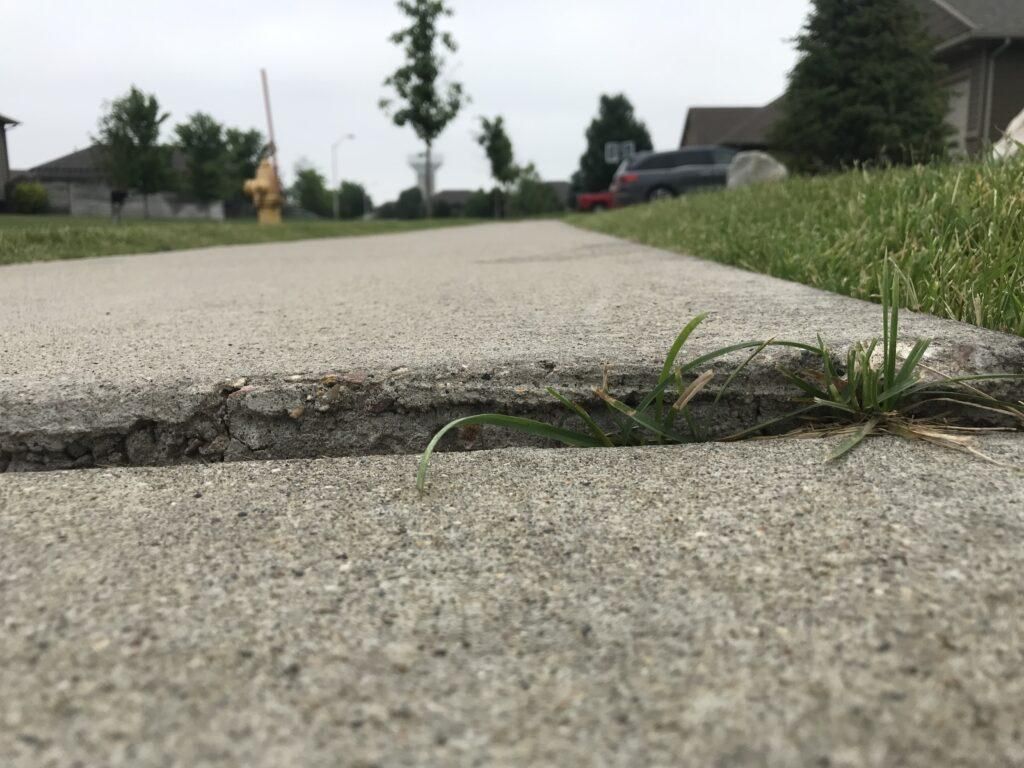
The most common cause of a sinking concrete driveway is erosion or compaction of the soil beneath it. Heavy rain washes away fine soil particles, leaving voids under the slab. Once those voids form, the concrete has nothing to rest on and begins to settle. This is an especially common issue in Mid-Missouri, where clay-heavy soil and seasonal rainfall create persistent movement beneath driveways throughout Jefferson City, Columbia, and the Lake of the Ozarks.
Freeze-Thaw Cycles
In the Kansas City Metro, winters bring repeated freeze-thaw cycles. Water seeps into small cracks, freezes, expands, and forces those cracks wider with every cycle. Over time, this weakens the concrete from the inside and destabilizes the soil beneath, leading to settled or tilting slabs across Overland Park, Lee's Summit, and Belton.
Poor Initial Installation
Some driveways sink simply because the base was not prepared properly from the start. Inadequate soil compaction, a thin concrete pour, or a weak base layer means the driveway may begin settling years before it should.
Tree Root Intrusion and Drainage Problems
Tree roots draw moisture out of the soil, leaving voids as the ground dries and contracts. Poorly routed downspouts or graded lots that channel water toward the driveway compound the problem. In sloped neighborhoods throughout Lee's Summit or along the Lake of the Ozarks, improper drainage is one of the leading contributors to concrete settling.
When to Repair: Signs Your Driveway Can Be Saved
Concrete driveway repair is the right call in the majority of situations. Here is what typically makes a driveway a good candidate for lifting or leveling rather than replacement.
Settlement Under Two Inches
If your driveway has dropped less than two inches, the slab itself is almost certainly still structurally intact. The problem is what is underneath it. Polyjacking or another concrete lifting method can fill the voids, stabilize the ground, and bring the slab back to grade without touching the concrete itself.
Driveway Age Under 15 Years
Concrete has a long lifespan when supported properly. A driveway that is still relatively young, with good structural integrity, is an excellent candidate for repair. Lifting and stabilizing the slab can add many more years of service at a fraction of replacement cost.
Minor to Moderate Cracking
Small cracks that run along joints or appear isolated to one section do not mean the whole driveway is done. Crack repair combined with concrete lifting can address the underlying cause and resurface minor damage without tearing out the entire slab. Concrete resurfacing in Kansas City is a common follow-up once a slab has been leveled and stabilized.
Cost Sensitivity
Leveling a driveway is typically half to one-third the cost of full concrete replacement. Most polyjacking jobs in Kansas City and Mid-Missouri can be completed in a few hours, and the surface is ready to use within 15 to 30 minutes of completion. A full replacement, by contrast, means demolition, disposal, forming, pouring, and then waiting days for the concrete to cure.
Your Concrete Repair Options
Polyjacking (Polyurethane Foam Injection)
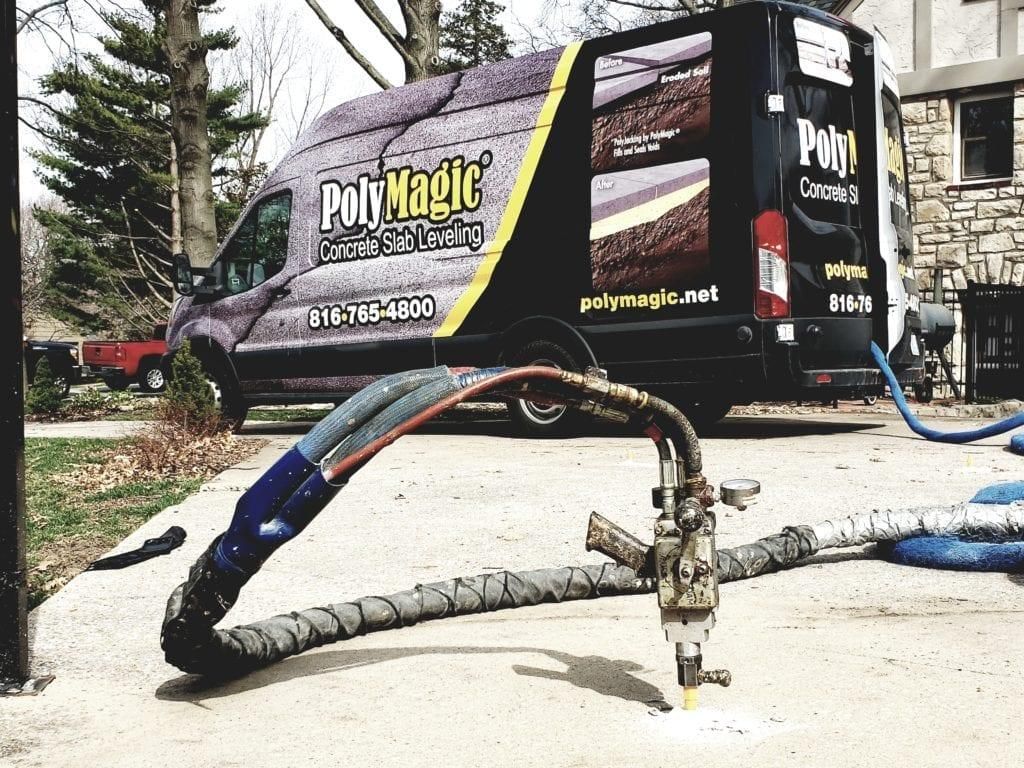
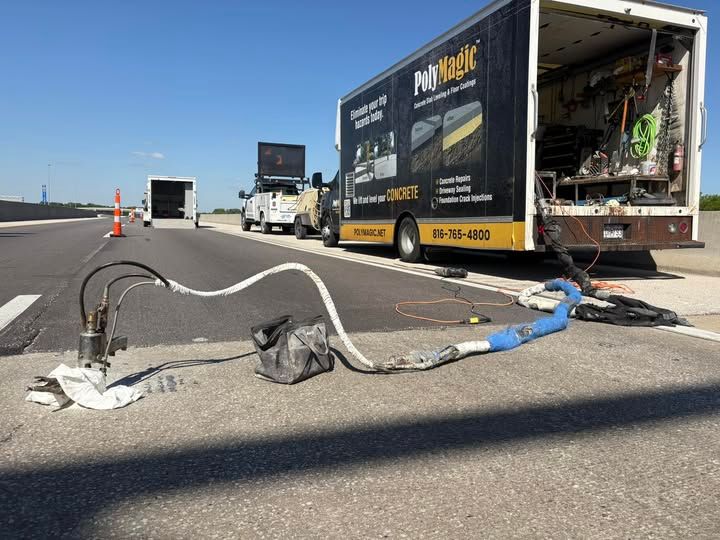
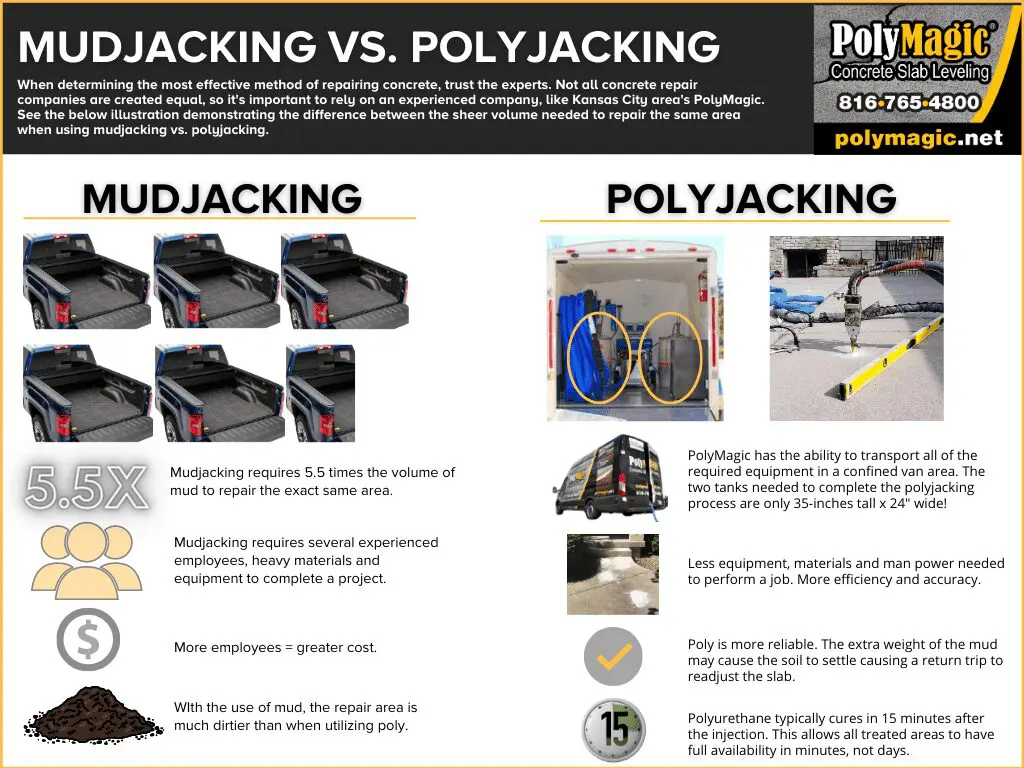
Polyjacking is the most effective and longest-lasting concrete leveling method available. A technician drills small 5/8-inch holes through the slab, then injects a two-part polyurethane foam beneath it. The foam expands rapidly, fills voids, and lifts the slab back to its original position, often within 15 to 30 seconds per injection point. The foam cures fully in minutes and is waterproof, lightweight, and resistant to soil movement over time.

This method is especially well-suited to Kansas City Metro and Mid-Missouri soil conditions. The polyurethane does not wash away or compress over time the way traditional mudjacking slurry can. For driveways in Jefferson City, Columbia, Overland Park, and Belton where clay soils shift seasonally, polyjacking provides a stable, long-term result. PolyMagic uses polyjacking as its primary concrete lifting method because of this reliability.
Concrete Crack Repair and Sealing
Surface cracks that have not compromised the structural integrity of the slab can often be addressed with crack injection or sealant. This is typically done alongside concrete lifting, after the underlying soil issue has been corrected. Sealing protects against water infiltration and slows further deterioration from freeze-thaw damage.
Concrete Resurfacing
If the driveway is structurally sound but the surface looks worn, pitted, or stained, resurfacing applies a new layer over the existing slab to restore appearance and texture. Resurfacing is not a fix for sinking or settling. It works best after any leveling issues have been resolved.
When to Replace: Signs the Driveway Is Past Saving
Settlement Greater Than Two Inches
A drop exceeding two inches often indicates widespread soil failure or severe compaction beneath the slab. At this depth, the concrete may have cracked or shifted in ways that lifting cannot correct reliably.
Large Connected Crack Patterns
If cracks run across multiple sections, form spiderweb patterns, or cause slabs to shift in different directions from one another, the structural integrity of the concrete itself may be compromised. Lifting a slab that has broken apart into separate pieces will not produce a stable or safe result.
Drainage Failures
Standing water that consistently pools on or around the driveway after every rain, especially if previous repairs have not resolved the issue, may point to a drainage problem that requires regrading and a fresh pour to fix correctly.
Concrete Over 20 to 25 Years Old
Concrete weakens over time. A driveway past the two-decade mark that is also showing significant settling, cracking, or drainage problems may have reached the end of its practical lifespan. Replacement at this stage provides a clean structural start and the opportunity to address drainage and base issues that caused the original failure.
Repair vs. Replacement: A Quick Reference
Repair through polyjacking or leveling makes sense when the slab is structurally sound, settlement is minor to moderate, the driveway is under 15 to 20 years old, and cost minimization is a priority. The process takes a few hours, causes minimal disruption, and the driveway is usable the same day.

Replacement makes sense when the concrete has failed structurally, settlement is severe, the slab has broken into shifting sections, or the driveway has lived out its lifespan. The process takes several days and carries a significantly higher upfront cost, but provides a fresh start with modern materials and the opportunity to correct drainage.
The Easiest Solution? Get a Free Evaluation from PolyMagic
If your driveway is sinking, tilting, or cracking in the Kansas City Metro or across Mid-Missouri, PolyMagic can help you understand exactly what you are dealing with. We offer free estimates and will give you an honest assessment of whether your slab is a candidate for lifting or needs to be replaced. We serve Overland Park, Belton, Lee's Summit, and the broader KC Metro, and Columbia, Jefferson City, and Lake of the Ozarks from our Mid-Missouri office.
Call our Kansas City office at
816-762-7659 or our Jefferson City office at
573-708-7551, or contact us online to schedule your free on-site evaluation. A sinking driveway is a solvable problem. The right answer depends on what is happening beneath your slab, and that is exactly what we will help you figure out.